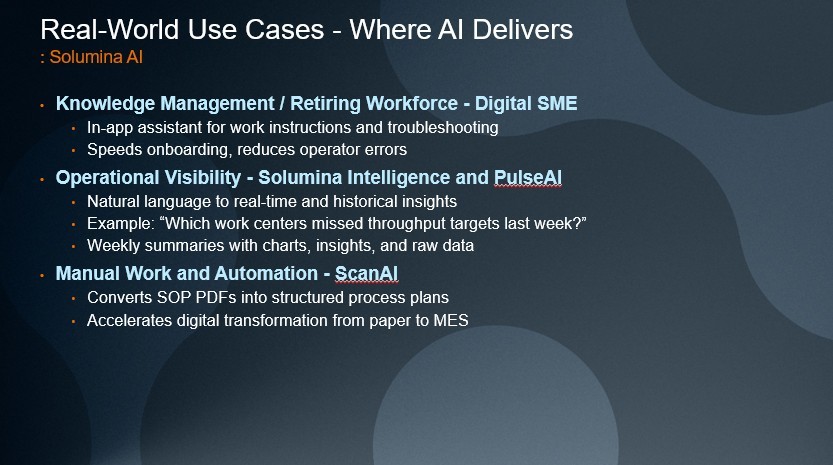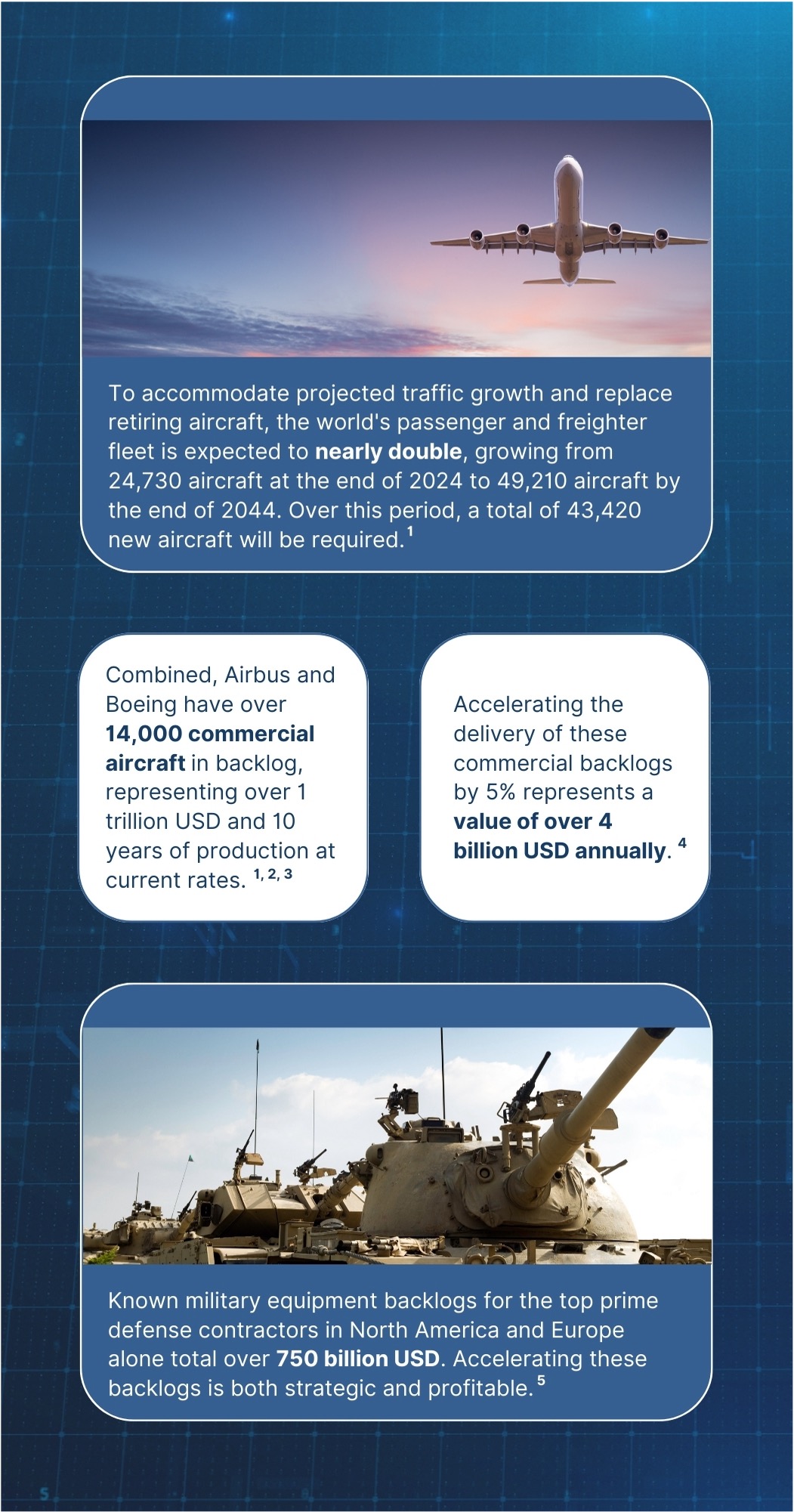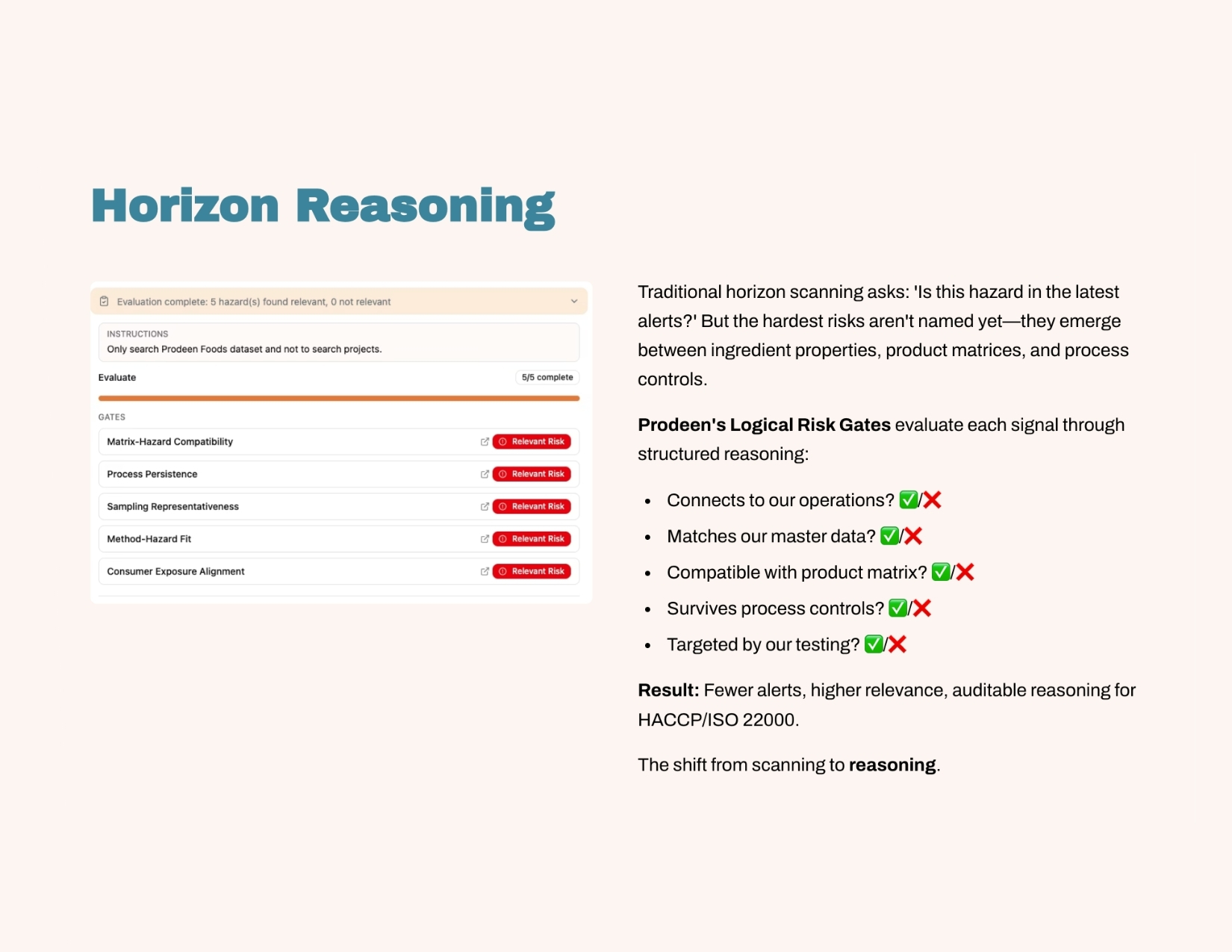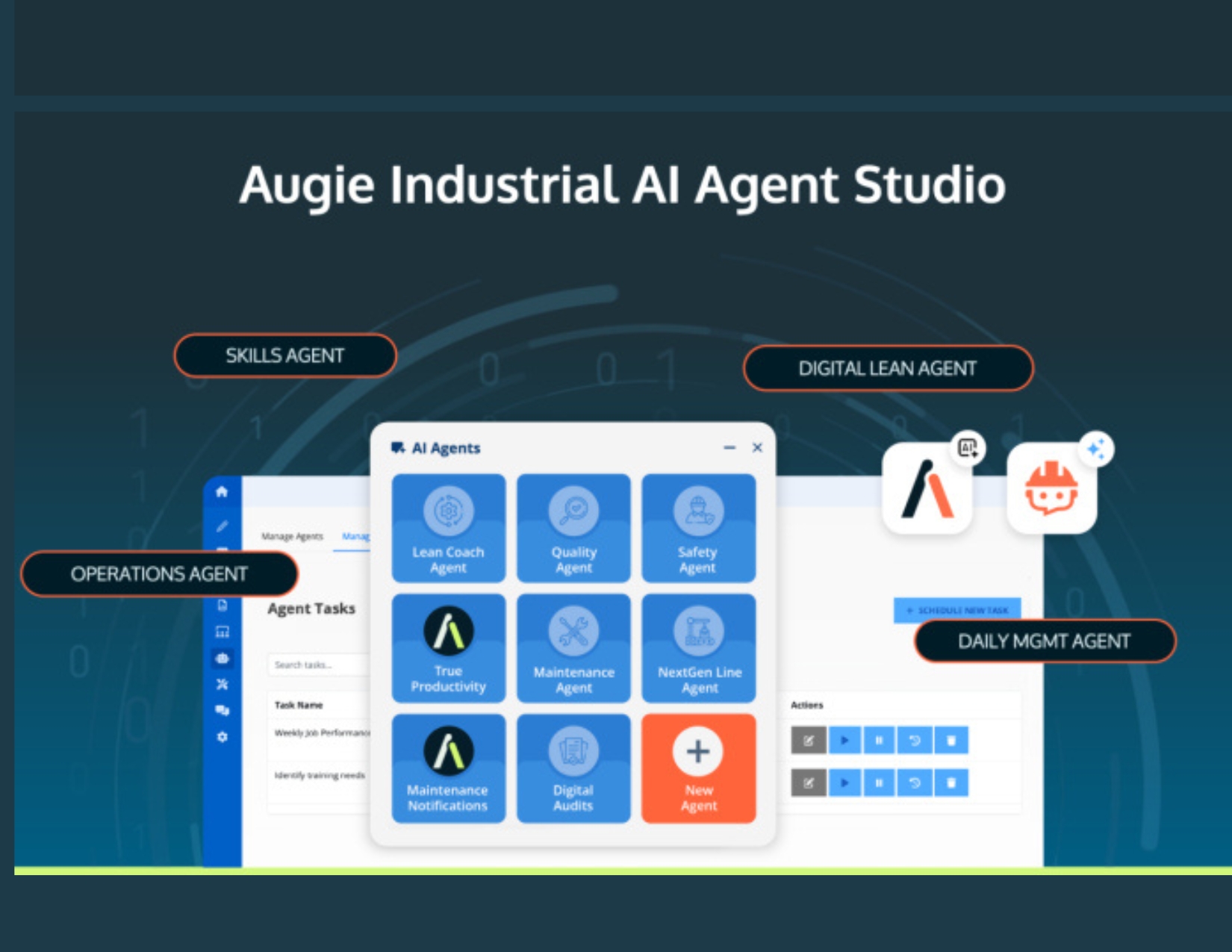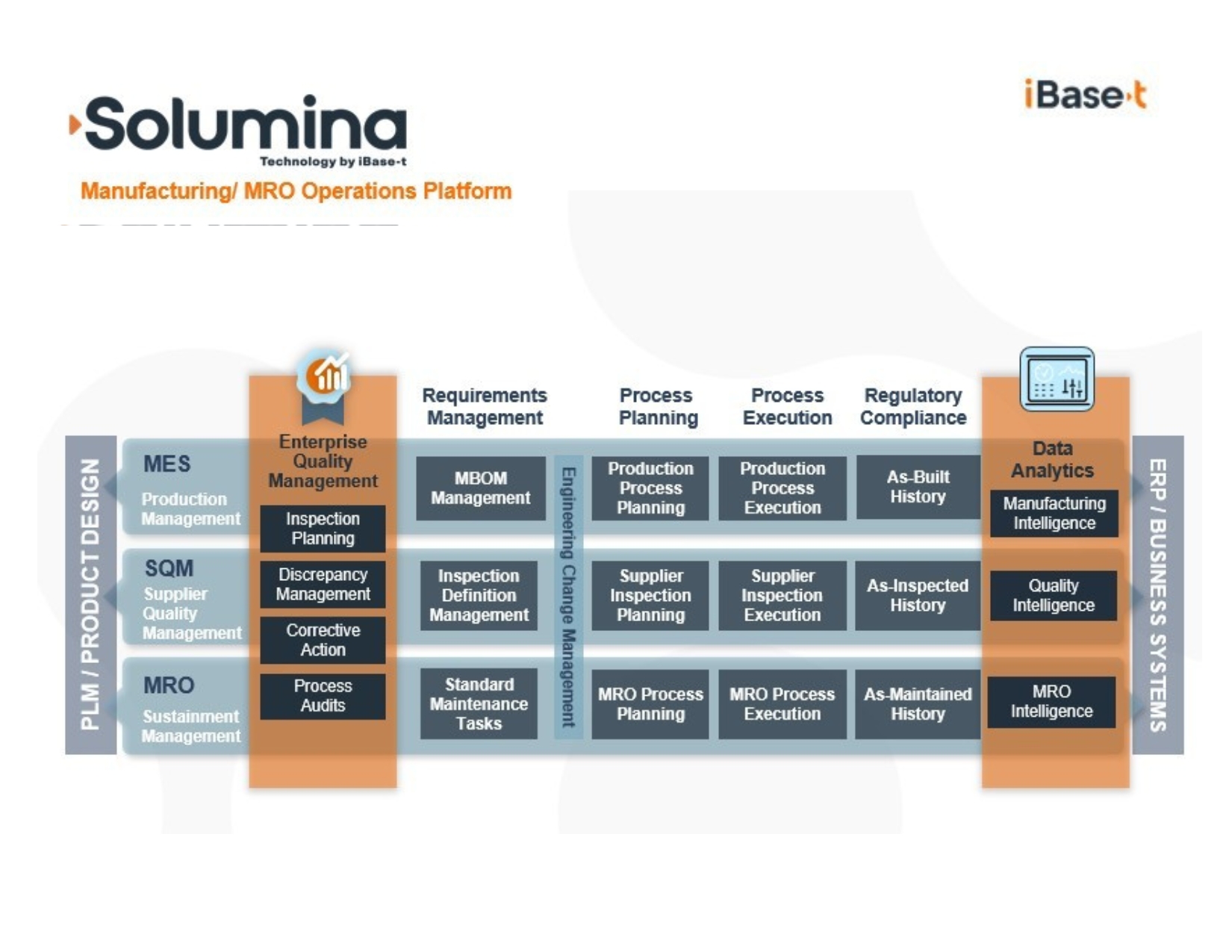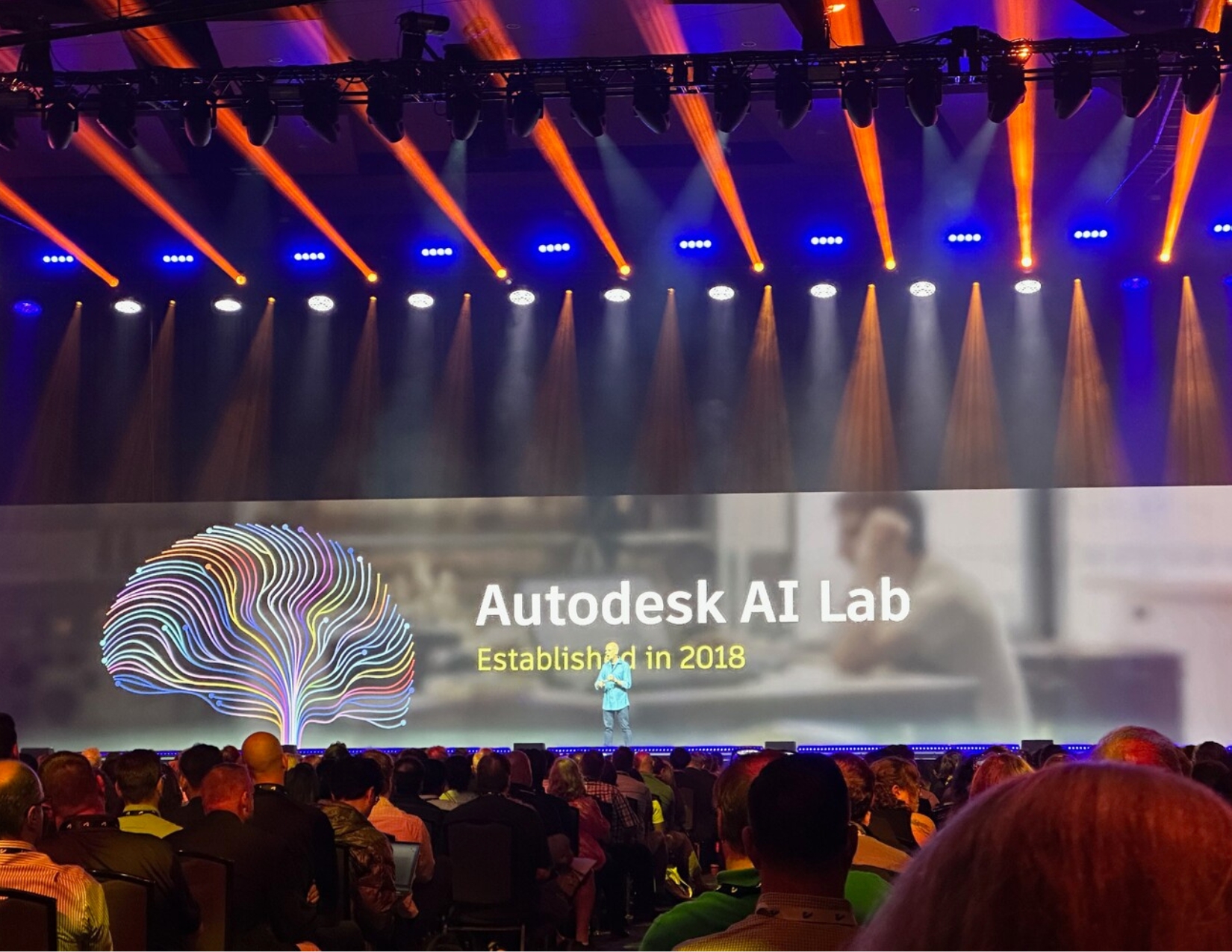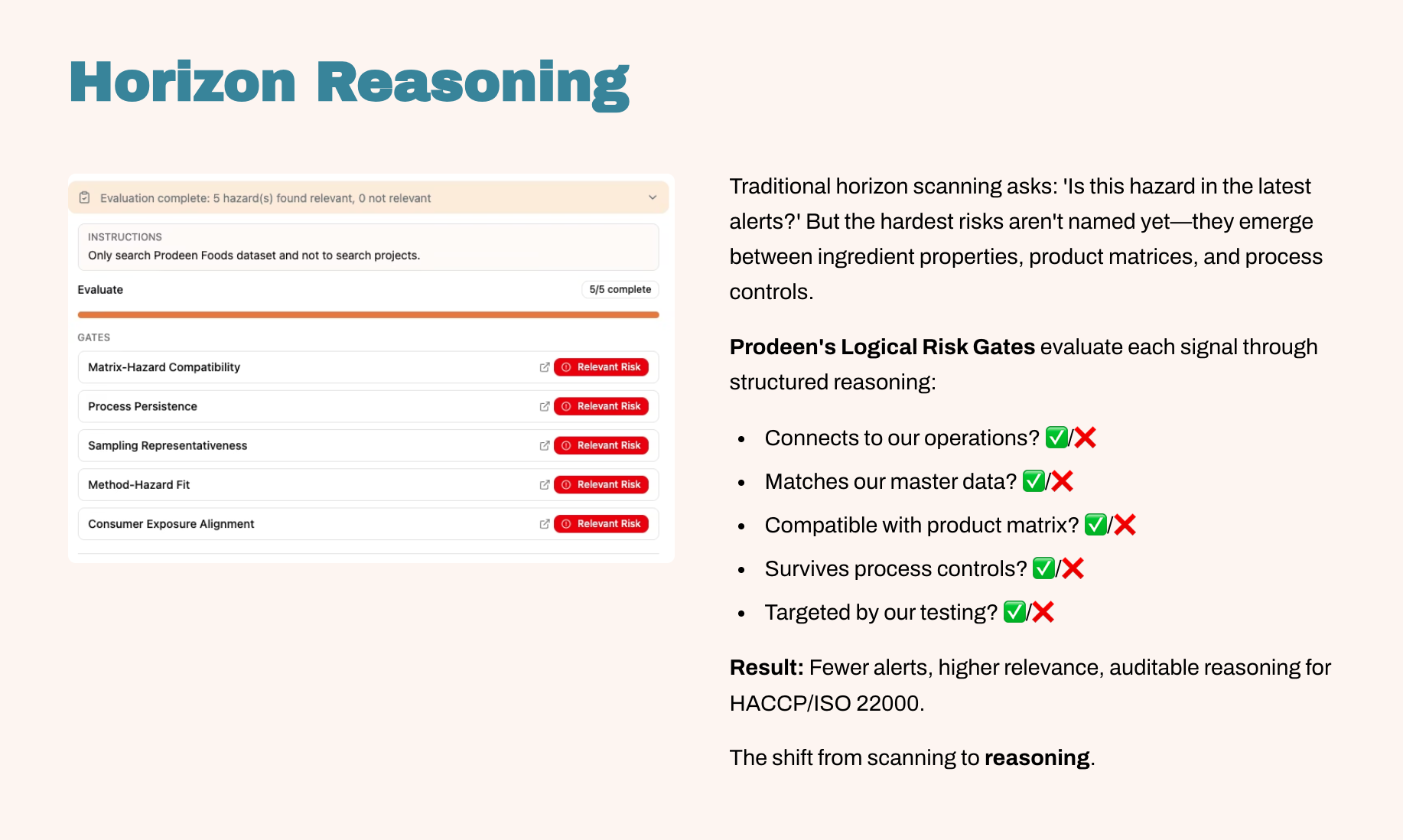
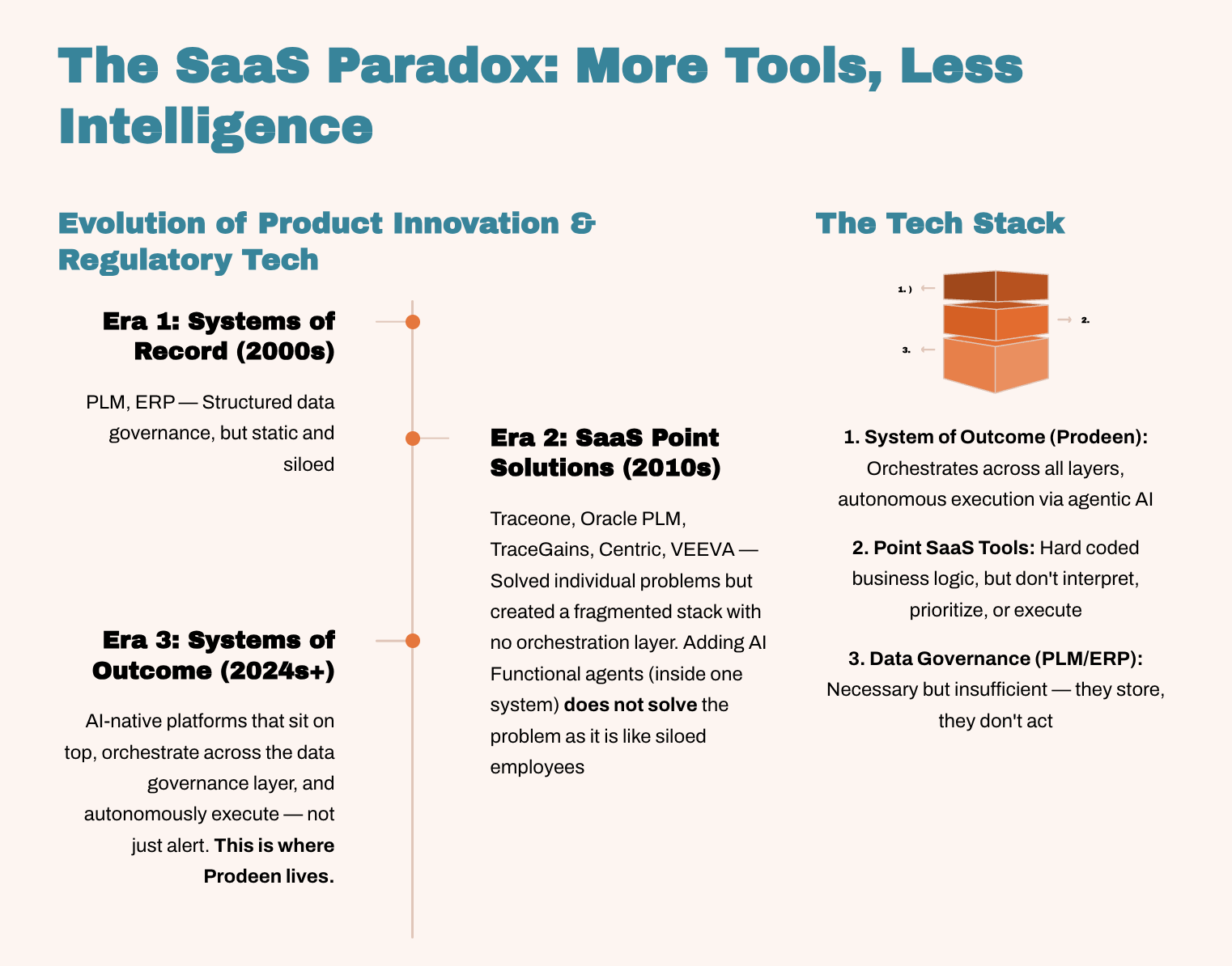
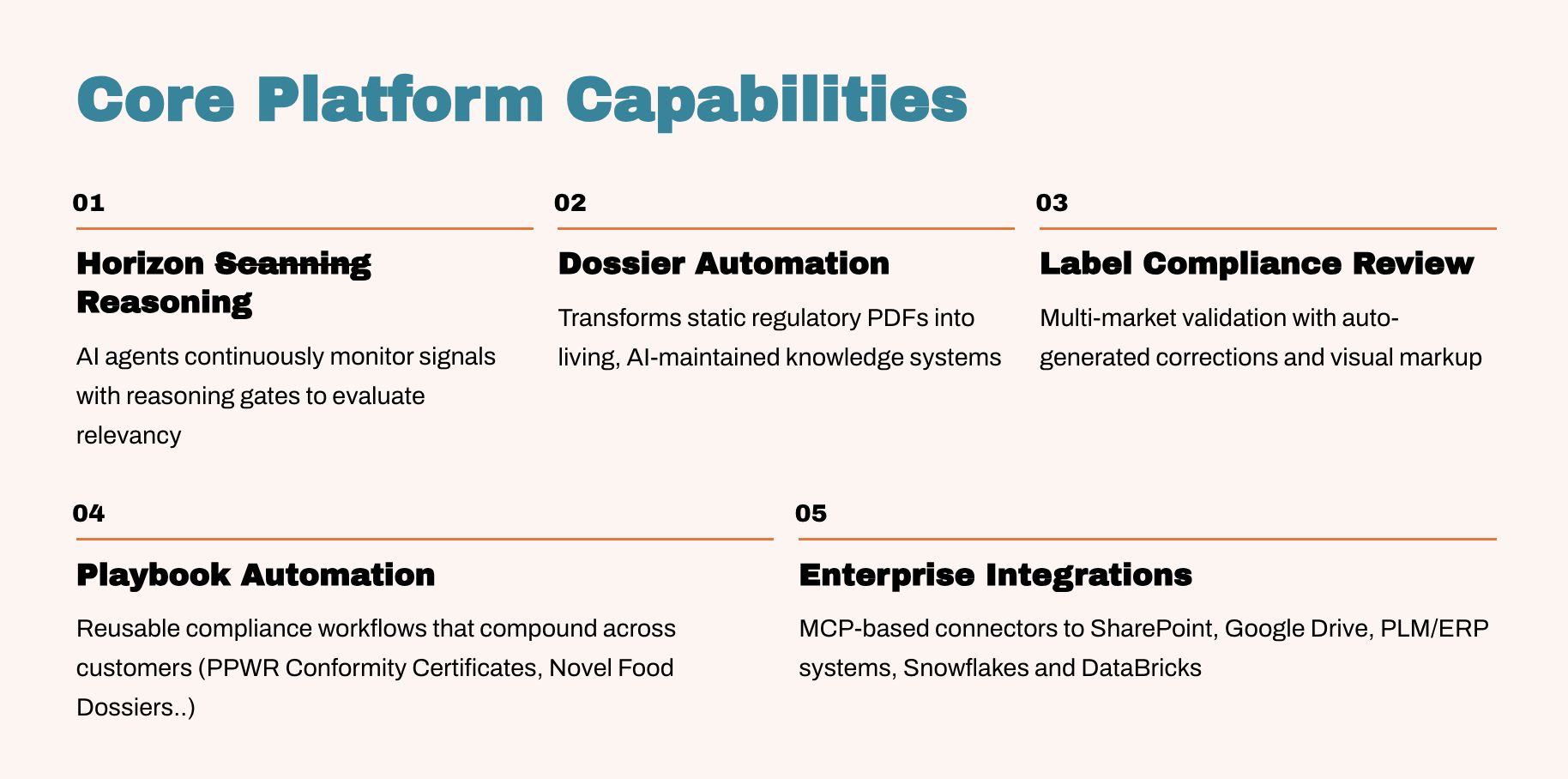
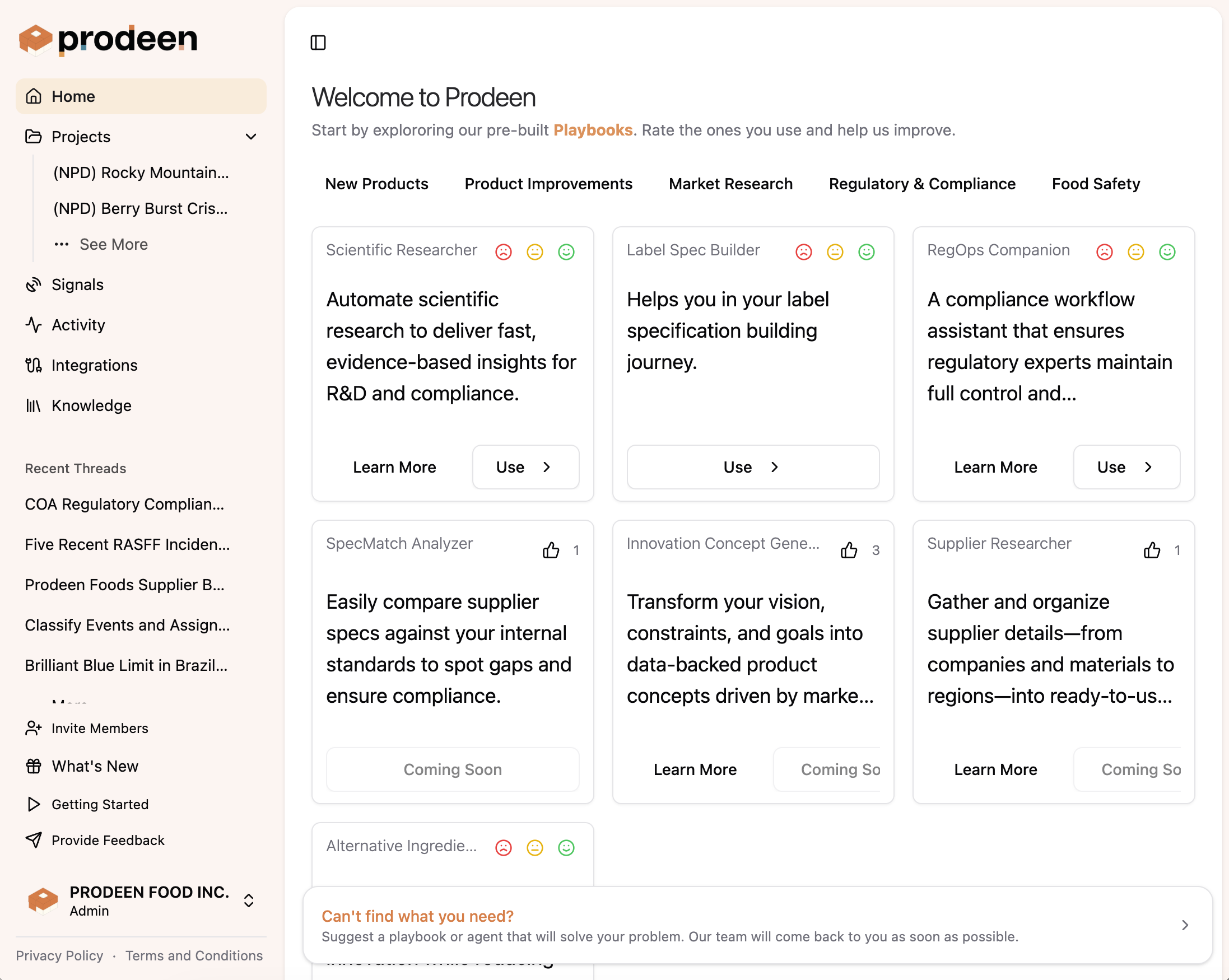
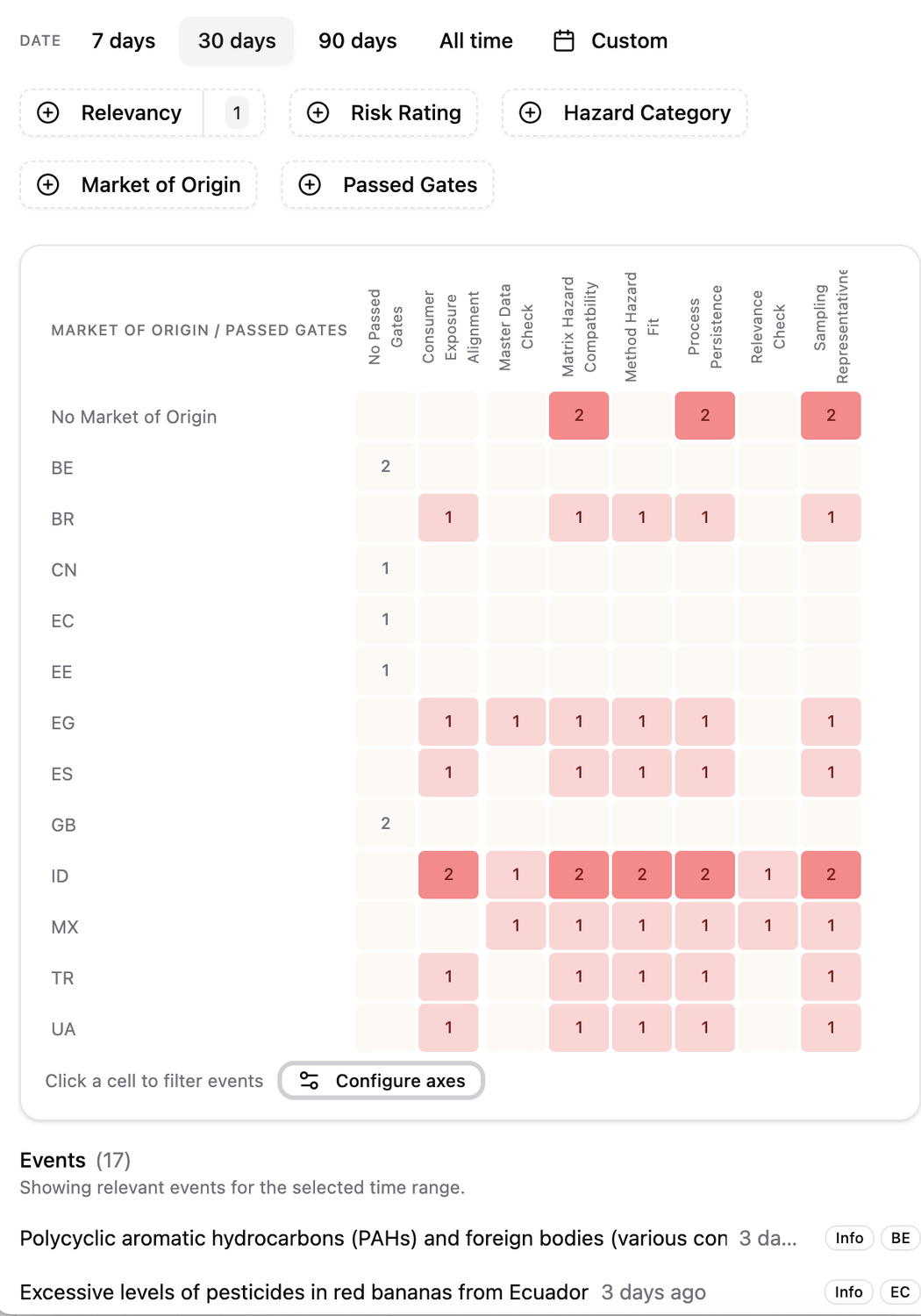











How can food and other recipe-based manufacturers accelerate their innovation without wasting time and compounding their compliance risks? Startup Prodeen offers AI agents and playbooks designed to turn the tide, and early customers are finding benefits. These early customers are global food and beverage companies. Initial users are in regulatory affairs, quality, and food safety,…
- Facilitating collaboration and innovation through global communities who effectively use the MESA Smart Manufacturing Model.
- Generating best-practice guidance which drives greater productivity and profitability in industrial enterprises.
- Educating on these topics through the MESA Global Education Program.
How can manufacturers meet customer traceability requirements faster and easier, with a higher level of reliability? Arcstone Advanced MES would argue that using the customer’s choice of LLM AI tool to access the real-time MES and supply chain data in their solution is the answer. Apparently, quite a few automotive components and food and beverage companies would agree, as Arcstone has been growing worldwide in these industries. Arcstone has also added an AI governance tool and a studio for building and governing apps. We recently caught up with founder Willson Deng to learn the latest.
Arcstone’s Vision
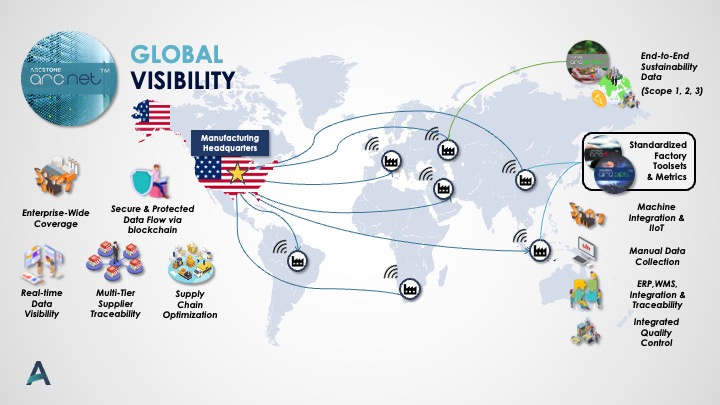
The concept behind Arcstone’s offering is that MES at every level is the missing link to achieve real-time, end-to-end supply chain visibility. The company’s stated mission is to provide complete manufacturing transparency across the entire supply chain. CEO Willson Deng states: “By digitalizing and integrating manufacturing operations from the shop floor right to the hands of consumers, we aim to enable a more responsive, responsible, and sustainable manufacturing ecosystem for us all.”
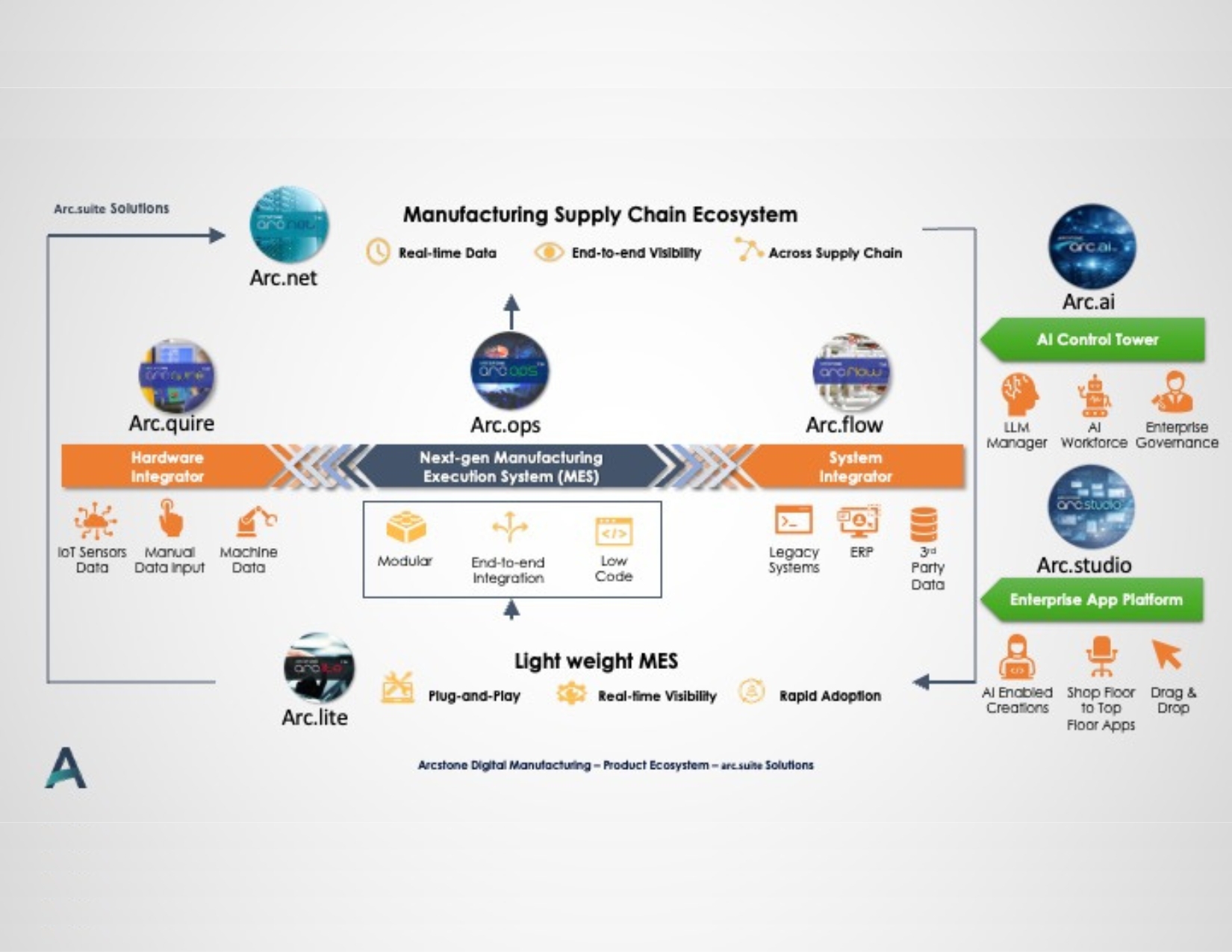
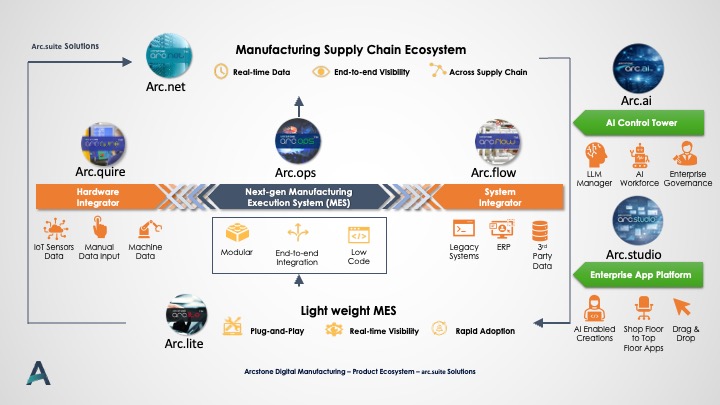
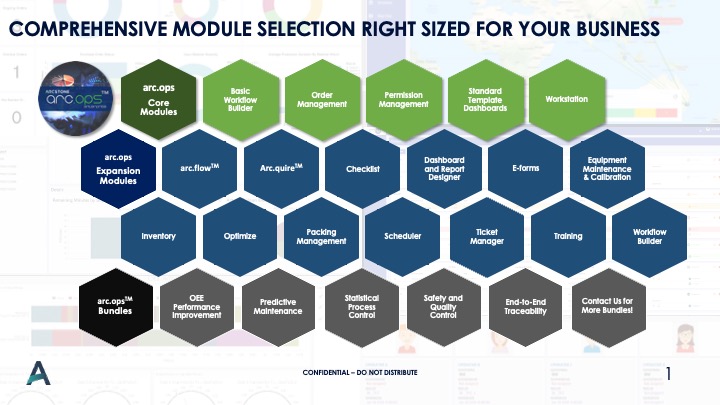
This company offers both MES and supply chain software, aiming to enable even the smallest suppliers to deliver accurate manufacturing data into their ecosystem. We had our first briefing with Arcstone a few years ago; that insight goes into the concept in more detail, lists the product elements, and shows them in a graphic.
Industry Uptake
The company serves many industries, but two in particular have adopted this multi-tier supply chain via MES approach. Precision-engineered automotive parts and components, as well as food and beverage products, have driven excellent worldwide growth for Arcstone.
- Food and beverage companies use supply chain traceability for materials provenance compliance. With real-time visibility, they can reduce the risk of making health-conscious and sustainability claims and focus on capturing demand for high-margin products.
- Automotive tier suppliers’ risk of recalls and product challenges goes even deeper. For them, Arcstone helps address not only regulatory compliance but also the total cost of supporting what you sell. With plant-floor visibility, the risk of misidentifying the root cause of problems is lower. Real-time information on each part shipped is the foundation for what Tesla and others call supplier “Grade A” traceability. So, this approach can improve both top-line revenue and bottom-line margin while reducing maintenance costs.
Both industries face significant risk from faulty materials in their products and are thus regulated accordingly. Automotive parts and food and beverage are highly competitive. They can both capture more or higher-margin revenue with better traceability.
Move to MCP for AI Access & Implementation Speed
Every conversation about software these days touches on AI. Arcstone’s focus is not on creating new tools, but on ensuring companies have protection when accessing actual manufacturing data from their software. Operations people spend plenty of time seeking data, and Arcstone created an MCP interface to enable any LLM or third-party system to read and interpret data across their own enterprise and their suppliers’, customers’, and partners’ systems. It has also created a manufacturing assistant agent that makes it easier to leverage data from the plant floor.
Exposing the Arcstone MES and supply chain systems’ data across the ecosystem has also made it easier to create integrations. An MES-to-ERP integration is crucial, and rather than the two or three people and a month it can often take, the new AI approach enables it to be handled by one person in a few days. MCP also cuts time by half or more when customizations are used to help ensure the MES matches operating best practices and is adopted by operators, Arcstone says. The Arcstone ecosystem of system integrators (SIs) is finding that this AI approach enables them to focus on customer success and satisfaction with fewer headaches, too.
New arc.ai and arc.studio Capabilities
In a pragmatic yet visionary way, Arcstone has also recently released two new capabilities to support governance in the age of AI and low-code apps.
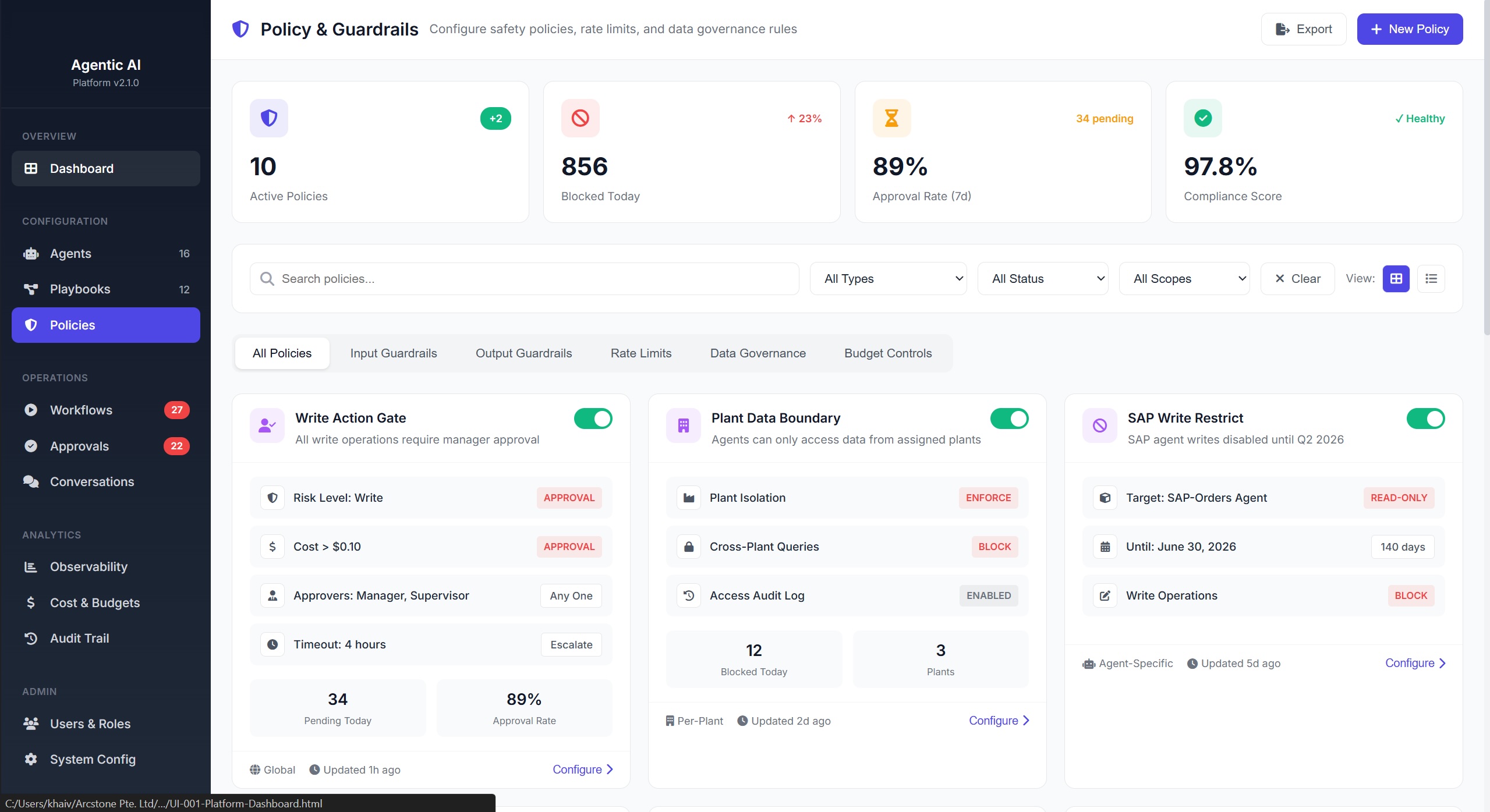
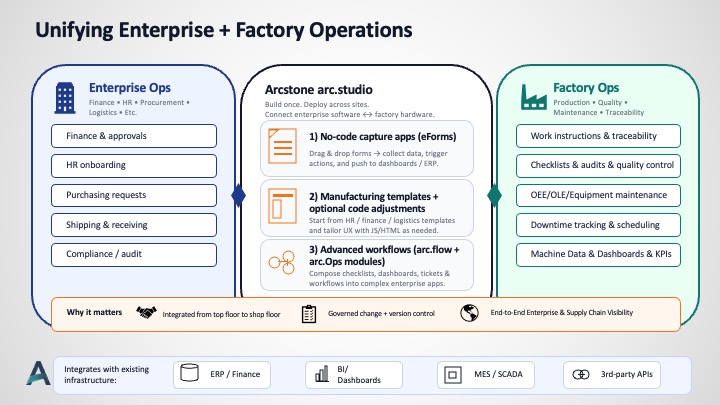
- The first is arc.ai, an enterprise AI governance platform. It includes a secure model gateway plus an agentic AI control tower for safe, cost-effective AI scaling. This layer helps with access and policies, audit and observability, and cost and usage controls. Arcstone delivers this in a phased manner: starting with SSO/RBAC foundations, then the model gateway, the agent control tower, and finally continuous improvement.
- For enterprise app creation, deployment, and governance of scalable apps, arc.studio delivers a drag-and-drop builder for templates that scale across sites, governance and version control, enterprise integration (including arc.net), a global rollout framework, and plug-in-approved AI services for faster integration.
The Mindset Shift
Deng is a true visionary and continues to offer new insights. One is that the mindset for MES and supply chain must shift from what it can do to how customers can use it. Today, AI can build code to do specific functions. Yet, the complexity of managing manufacturing data and sharing it across a particular enterprise and its supply chain ecosystem is where the fundamental value now lies. This underlying MES capability enables significant efficiency gains, whereas functional improvements and the addition of AI for specific capabilities typically deliver only incremental improvements.
Thus, the Arcstone roadmap is less focused on functionality than on robustness, reliability, and ease of use for SIs to do what they need to do. Arcstone’s focus on architecture and ease of customization is to satisfy the SIs. The SIs are there to help manufacturers learn to use the system, then hand it over to end customers to manage and maintain, with no support beyond what they might need.
Our Take
Arcstone’s vision of end-to-end multi-tier supply chain visibility to the factory floors is a strategic dream for most manufacturers. So is the level of sustainability it could enable. In many industries, being wasteful is more cost-efficient than addressing yield issues at the source. However, as regulations change, we expect to see more uptake of this unusual plant-first approach to supply chain resilience.
As commercial LLMs and AI tools mature, their integrate-what-you-choose approach may also serve them and their customers well. Adding arc.ai appears to lower the risk considerably. It can also help corporate IT as they gain AI expertise and new approaches continue to emerge. When combined with arc.studio for governed apps, the picture starts to make sense, particularly for larger enterprises and their ecosystems.
Arcstone’s partner-first philosophy further differentiates them. While many other MES and supply chain providers seek to perform services or ask customers to do it themselves with low-code or AI approaches, this can create competition with SI partners. Arcstone sees the SIs as the expert human touch that customers want and need for implementation, customization, and ongoing 24x7 support worldwide.
We have been impressed by Arcstone's vision and approach for years. We look forward to hearing about what comes next.
[post_title] => Arcstone Opens to AI to Speed Supply Chain Traceability Implementation [post_excerpt] => [post_status] => publish [comment_status] => open [ping_status] => open [post_password] => [post_name] => traceability-implementation [to_ping] => [pinged] => [post_modified] => 2026-03-01 12:45:34 [post_modified_gmt] => 2026-03-01 17:45:34 [post_content_filtered] => [post_parent] => 0 [guid] => https://tech-clarity.com/?p=23602 [menu_order] => 0 [post_type] => post [post_mime_type] => [comment_count] => 0 [filter] => raw ) [3] => WP_Post Object ( [ID] => 23532 [post_author] => 2 [post_date] => 2026-02-24 09:50:59 [post_date_gmt] => 2026-02-24 14:50:59 [post_content] =>
Our research shows that 86% of companies consider environmental sustainability to be critical or important to their long-term business success. Further, our studies show that digital transformation is crucial to achieving it. But how can companies determine the sustainability impact their technology adoption makes to make a business case for new solutions? This eBook explores the relationship between digital transformation and sustainability, and more specifically, how sustainability impact can be credibly measured and used to make business decisions. The eBook uses and shares highlights from eleven credible, audited case studies from real companies that have improved sustainability through technology adoption.
Please enjoy the summary below. For the full research, please visit our sponsor, Dassault Systèmes (registration required).
Table of Contents
- Digital Transformation's Sustainability Value
- Why Calculate Sustainability Impact?
- How to Approach Impact Reporting
- How to Calculate Sustainability Impact
- A Sustainability Impact Methodology: Case in Point
- Case Studies
- Recommendations
- Acknowledgments
The Business Value of Sustainability
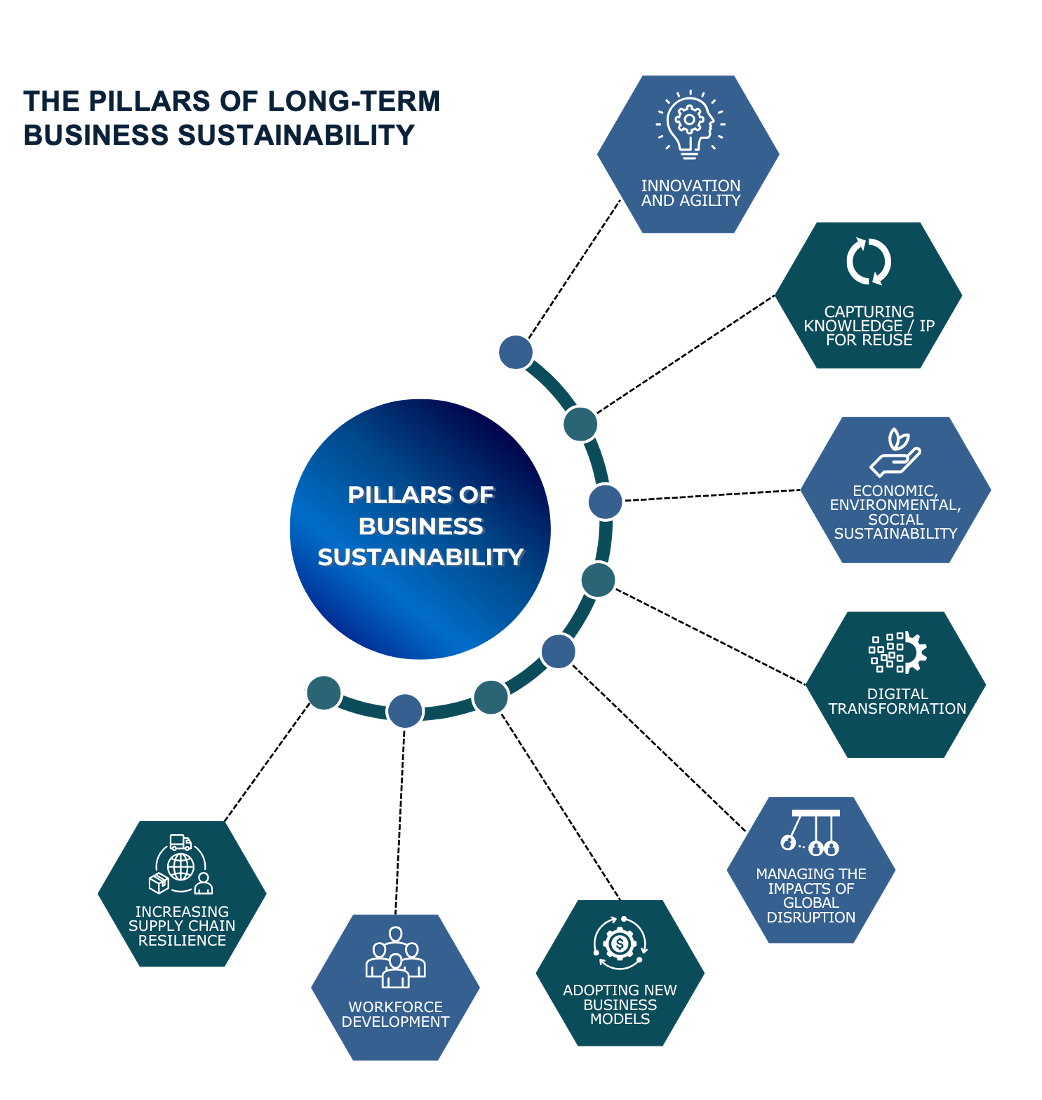
The ESG Imperative Sustainability is increasingly recognized as essential to long-term business value. ESG (Environmental, Social, and Governance) is a fundamental pillar of sustainable business success, alongside other business imperatives including innovation, supply chain resilience, and workforce development. Sustainability is now a must-have. Our research on strategies for sustainable business success shows that the vast majority of companies, 86%, consider environmental sustainability to be critical or important to their long-term business success. Measuring Sustainability Impact More companies recognize the business value of sustainable practices. A joint United Nations–Accenture study reports that 88% of CEOs say the business case for sustainability is stronger than it was five years ago. But what is the value, how can it be measured, and can it be incorporated into company processes to help companies choose the right initiatives and partner to achieve it? This research answers those questions. It introduces the importance of digital transformation in achieving ESG benefits and shares a credible, scientific approach to measuring the business value of sustainability impact.
Digital Transformation’s Sustainability Value
Sustainability Demands Digital Transformation
Sustainability is good business, and ESG initiatives require supporting technology. More than three-quarters of companies, 82%, report that technology / digital transformation is important or critical to support environmental and social sustainability. Digital transformation and sustainability can go hand-in-hand.
Difficulty Determining Sustainability Value
While most digital transformation initiatives and technology investments are initiated and justified to achieve a financial return on investment (ROI), it’s important to recognize their ESG advantages in addition to their financial benefits. For example, manufacturers may reduce cost by improving production efficiency while also reducing carbon emissions. Similarly, engineers could optimize designs to enhance performance while simultaneously reducing energy usage and waste. These values should be calculated to complement the financial ROI and improve decision-making based on ESG impacts.
Driving Economic and Environmental Advantages
A joint Rockefeller Asset Management-NYU Stern Center for Sustainable Business analysis reports a growing consensus that good corporate management of ESG issues typically results in improved operational metrics such as return on equity (ROE), return on assets (ROA), or stock price. It’s increasingly valuable to determine the sustainability impact of digital transformation more directly associated with the initiative leading to the improvement. It’s even more valuable to estimate this impact in advance, complementing the financial ROI with a strategic sustainability ROI to help justify the investment.
While companies have significant experience deriving financial metrics, they often lack the ability to accurately and holistically measure the ESG impact of their digital transformation efforts on their value chain. This research explores how to properly determine the value, and reviews case studies that show tangible sustainability impact based on a credible, scientific methodology.
Case Studies
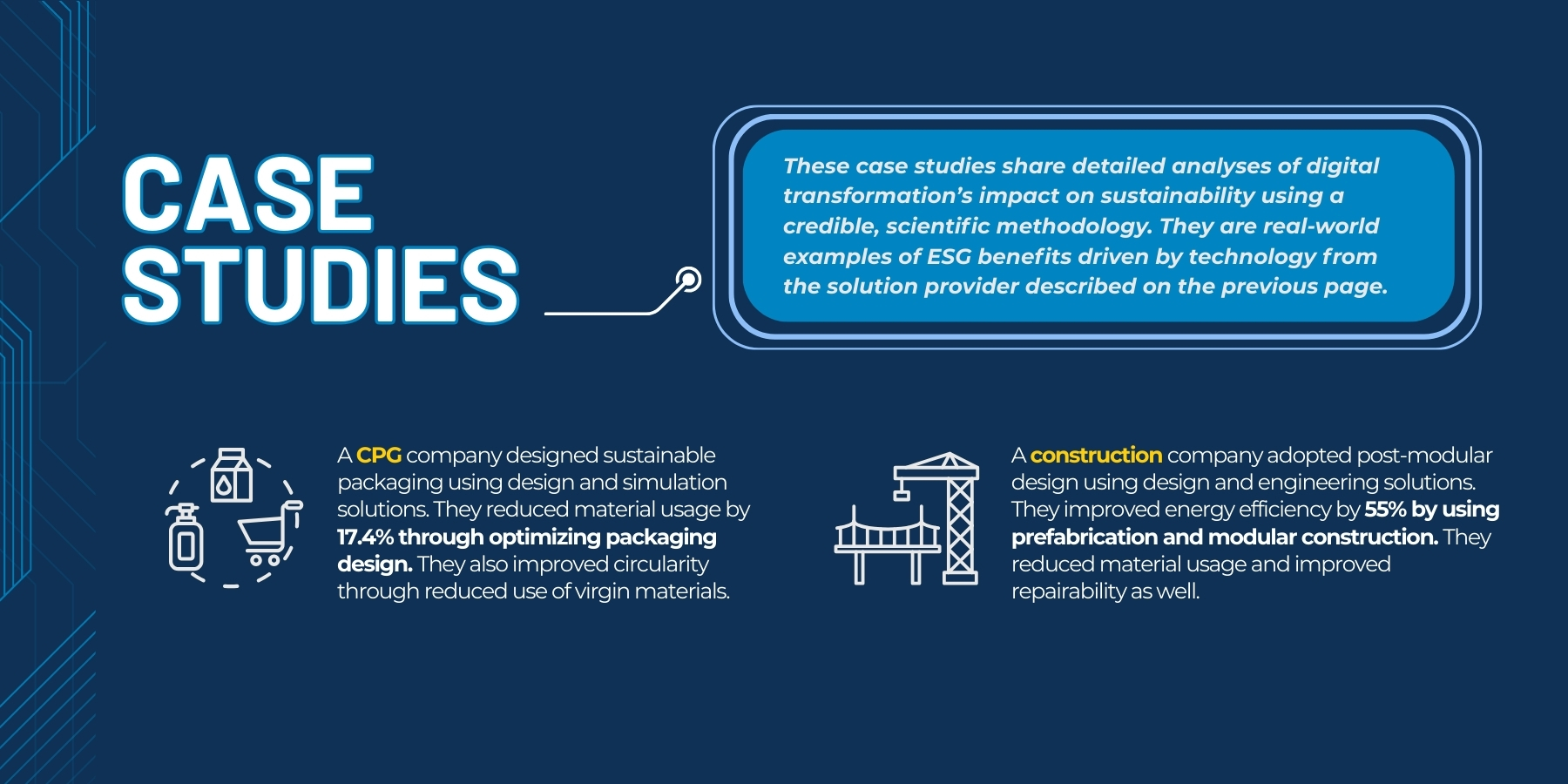
Sample Case Studies Here is a sample including two of the eleven case studies in the eBook.
Recommendations
Adopt a Sustainability Impact Mindset Focus on the sustainability value of digital transformation in addition to the financial ROI to achieve business success and resilience. ESG strategy drivers, including internal goals for net zero, customer sustainability demands, and calls for transparency like product passports, have increased. 96% CEOs agree that innovation and technological progress are essential to achieving the global sustainability agenda, and 82% of organizations plan to increase environmental sustainability investment in the next 12–18 months. Determine Sustainability Value The case studies demonstrate that digital transformation delivers tangible sustainability benefits. It’s time for companies to invest in a scientifically grounded methodology to calculate and demonstrate the sustainability value of their initiatives. Moving from general statements to scientific calculations is demanding but also a positive step to better articulate digital transformation's true value. It will require help from a variety of sources, including external experts and their digital solution and service providers. These companies can demonstrate how their solutions are proven to drive both financial and ESG value. Where possible, companies may also be able to leverage the solution provider’s methodology and case studies to calculate their own value. Use Sustainability Value to Justify Initiatives Looking to the future, companies should use the sustainability impact approach proactively. They can leverage case studies and company data to choose initiatives with ESG impact in addition to cost, quality, and efficiency improvements, ensuring they achieve both financial and sustainability ROI from their digital transformation initiatives. Getting better at measuring sustainability impacts also paves the way for building resilient, strategic, and robust operations. *This summary is an abbreviated version of the ebook and does not contain the full content. For the full research, please visit our sponsor, Dassault Systèmes (registration required). If you have difficulty obtaining a copy of the research, please contact us. [post_title] => Measuring Sustainability Impact [post_excerpt] => [post_status] => publish [comment_status] => open [ping_status] => open [post_password] => [post_name] => sustainability-impact [to_ping] => [pinged] => [post_modified] => 2026-02-24 09:50:59 [post_modified_gmt] => 2026-02-24 14:50:59 [post_content_filtered] => [post_parent] => 0 [guid] => https://tech-clarity.com/?p=23532 [menu_order] => 0 [post_type] => post [post_mime_type] => [comment_count] => 0 [filter] => raw ) [4] => WP_Post Object ( [ID] => 23514 [post_author] => 2582 [post_date] => 2026-02-20 10:50:19 [post_date_gmt] => 2026-02-20 15:50:19 [post_content] =>
How can manufacturers develop a digital thread and unlock the business value necessary to stay competitive?
Today’s manufacturers operate in an environment defined by compressed timelines, increasing product complexity, and heightened customer expectations. Success depends on the ability to move quickly without sacrificing quality, compliance, or profitability. To achieve this, organizations must enable seamless collaboration and smarter decision-making across engineering, manufacturing, quality, and the supply chain.
True operational efficiency comes from connecting people and processes through a single, reliable source of product information. When every team works from accurate, up-to-date product information, organizations reduce errors, eliminate rework, and respond more effectively to change.
A product digital thread makes this possible. Enabled by product lifecycle management (PLM), the digital thread creates a continuous, end-to-end flow of product data across the organization and throughout the product lifecycle. This eBook explores what a PLM-enabled digital thread is, why it matters, and how manufacturers can build one to drive lasting business value.
Please enjoy the summary* below. For the full research, please visit our sponsor, Propel (registration required).
Table of Contents
- The Chaotic Status Quo
- Chaos Hampers Productivity
- Connect Product Data
- CAD Can Serve as the Foundation
- Unmanaged CAD Data is Costly
- It's Time to Unlock CAD Data
- More Data Shared with More People
- Connect Product Data to PLM
- Extend PLM to the Enterprise
- Establish the Product Digital Thread
- Additional Considerations
- Get Started
- Acknowledgments
A Digital Thread for Greater Speed and Agility
Business Complexities Drive Need for a Digital Thread Manufacturers of all sizes are under pressure to rapidly deliver innovative products while meeting increased customer expectations, designing more complex products, and staying ahead of market demands. For manufacturers, business agility and getting products to market quickly can determine profitability, or even whether they stay in business. Product companies require operational efficiency that fosters collaboration, enables faster and smarter decision-making, and ensures synchronization with the supply chain. Picture all of the teams and people bringing a new product to market, accessing the same, accurate, up-to-date product information. To make this happen, manufacturers must establish a product digital thread throughout the organization and product lifecycle. How can manufacturers develop a digital thread and unlock the business value necessary to stay competitive? Keep reading to find out what a product lifecycle management (PLM)-enabled digital thread is, why it is needed, and how to build one.
The Chaotic Status Quo
New Product Development is More Complex
For manufacturers, delivering profitable products to the market has become significantly harder. Products are more complex than ever, requiring additional resources with expertise in new disciplines, driving up development costs, and putting profit margins at risk.
The Heightened Impact of External Pressures
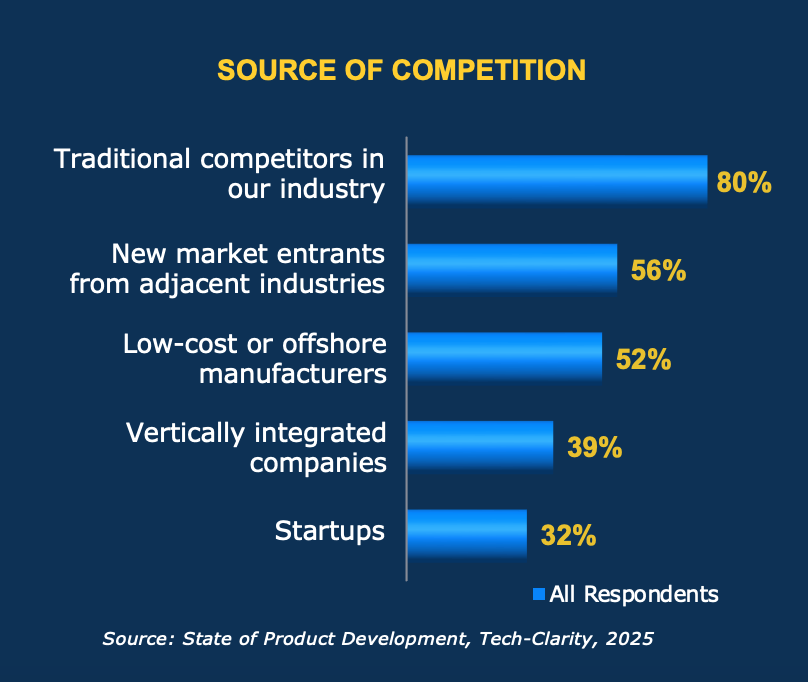
Some of this complexity arises from external factors outside a manufacturer’s control. Customers are increasingly demanding, expecting innovative products more quickly than ever before. Competition is coming from all directions. Not only from traditional competitors, but also from new entrants. Our State of Product Development survey found that 56% of manufacturers face competition from adjacent industries, while 52% compete with low-cost or offshore manufacturers.1 Today’s supply chains add to the challenge. In fact, 74% of manufacturers in the survey identified supply chain disruptions or market volatility as a top challenge in product development.2 Beyond that, government and industry regulations are widespread, especially in High Tech and medical technology, demanding strict engineering and quality processes with thorough data collection and management.
Multi-CAD Environment Complicates Design Collaboration
Some of the complexity stems from internal issues. Remember when products were primarily mechanical?
Those days are gone. Now, mechanical, electrical, and software teams all need to work together – and be productive doing it. They must ensure that form, fit, and function all work in harmony while delivering their designs on the same development and launch timeline.
However, each design discipline uses different tools, with product data stored and managed separately or, in the worst case, only on an individual engineer's drives. Managing and accessing product data across multiple design systems, let alone file folders and shared drives, negatively impacts collaboration and reduces productivity.
Establish the Product Digital Thread
Where to Start
For some manufacturers, establishing a digital thread may be viewed as out of reach when facing budget, resources, and time constraints. However, manufacturers can establish a digital thread despite these challenges.
Use 80-20 Rule
Applying the 80-20 rule helps focus on the most important and common use cases and workflows first. These deliver the most significant business value without getting bogged down with less common and more complicated edge cases. In short, keep it simple.
Keep Established Workflows
Established workflows need to continue, especially those supporting regulatory requirements, but avoid excessive customization whenever possible. Using out-of-the-box functionality saves implementation time and money, and reduces the need for dedicated IT resources.
Connect Existing Systems
There is no need to start from scratch. A practical approach is to connect existing CAD, PDM, and PLM investments and applications that are working well to create the product digital thread.
Take a Phased Approach
The best path is to take it one step at a time. Since data across systems is probably not perfectly aligned, a phased approach to PDM-PLM integration is preferred. Start with a small project, or assembly, to avoid a massive data cleanup upfront. Then add new projects and products as data cleansing progresses.
*This summary is an abbreviated version of the eBook and does not contain the full content. For the full research, please visit our sponsor, Propel (registration required).
If you have difficulty obtaining a copy of the research, please contact us.
[post_title] => Building the Digital Thread to Improve NPD Performance
[post_excerpt] =>
[post_status] => publish
[comment_status] => open
[ping_status] => open
[post_password] =>
[post_name] => digital-thread
[to_ping] =>
[pinged] =>
[post_modified] => 2026-02-20 10:50:20
[post_modified_gmt] => 2026-02-20 15:50:20
[post_content_filtered] =>
[post_parent] => 0
[guid] => https://tech-clarity.com/?p=23514
[menu_order] => 0
[post_type] => post
[post_mime_type] =>
[comment_count] => 0
[filter] => raw
)
[5] => WP_Post Object
(
[ID] => 23503
[post_author] => 2
[post_date] => 2026-02-19 09:59:01
[post_date_gmt] => 2026-02-19 14:59:01
[post_content] =>
Revisiting the future of PLM in Consumer Packaged Goods in the Age of AI
In 2022 Tech-Clarity, Kalypso, and PepsiCo discussed the future of PLM in CPG based on a Tech-Clarity survey on the state of CPG PLM. So much has changed over the last several years. Even then, the majority of companies felt their existing PLM wasn't ready to meet their future needs. Now, AI is broadening the gap.- What did we get right and what did we miss?
- Is PLM reaching its strategic value as a platform or limited to cost and compliance?
- Are today’s PLM implementations better suited to meet future needs?
- How does a composable PLM approach help increase value?
- How has increased AI adoption changed PLM value? PLM requirements?
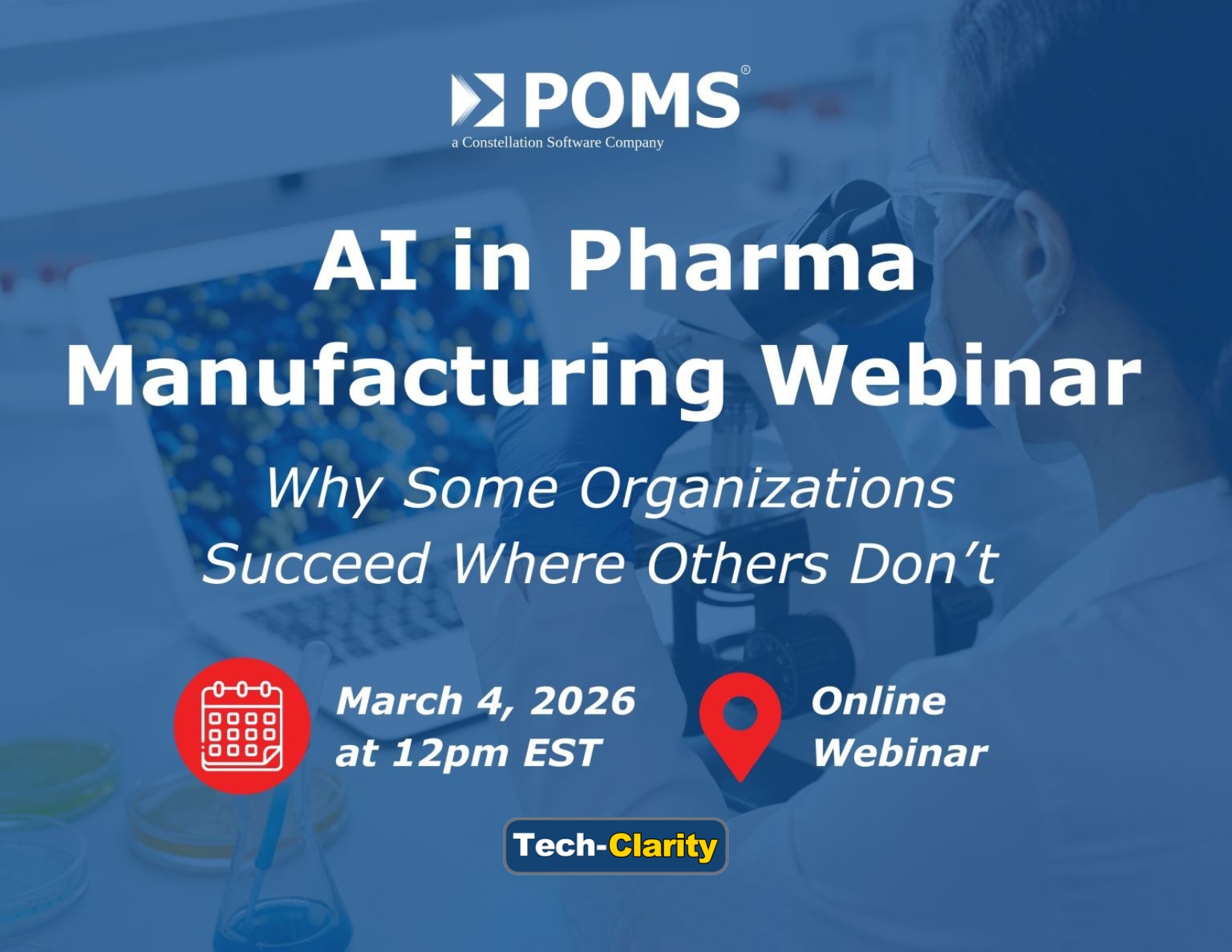
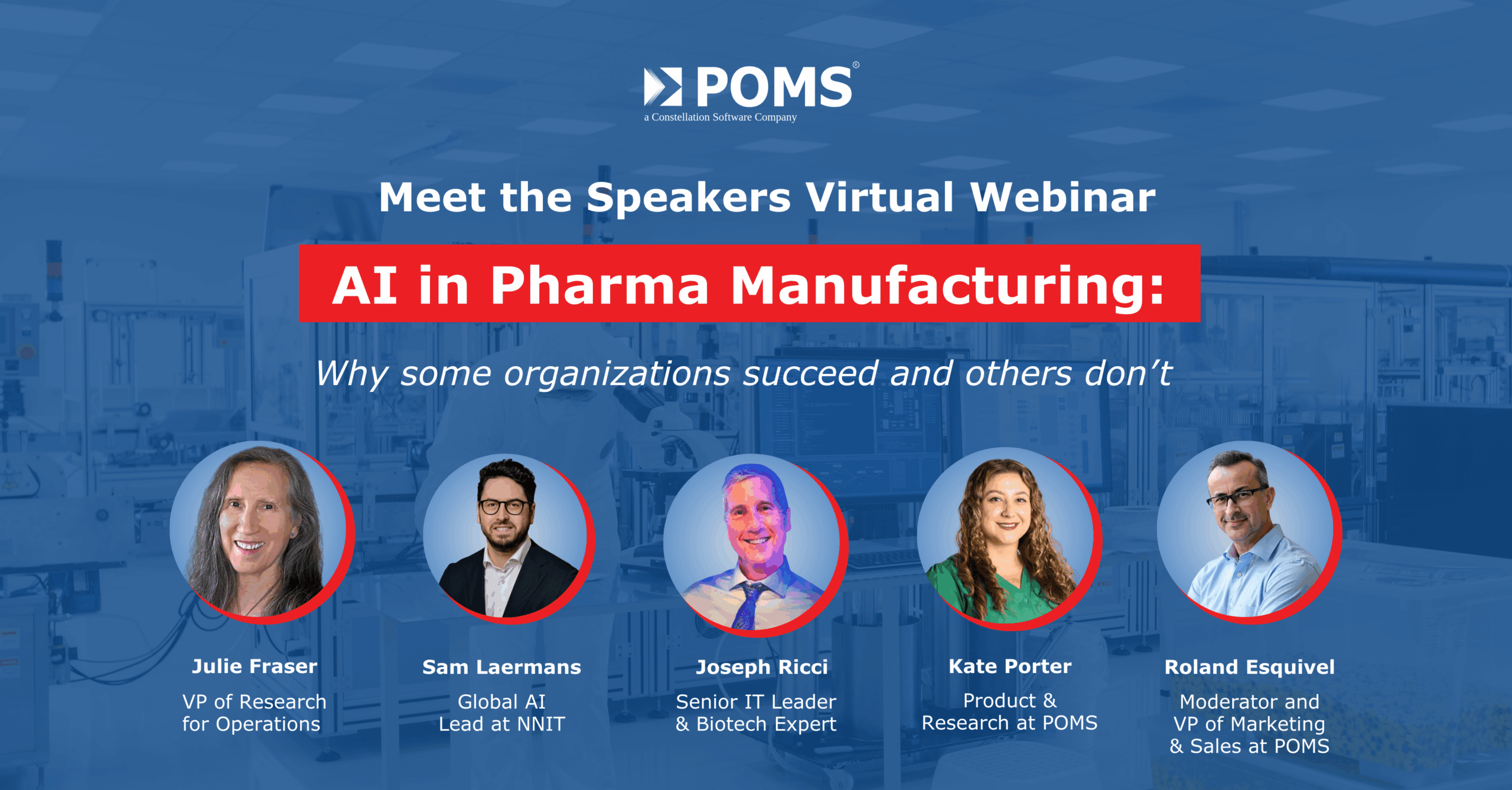
What is the role of AI in Pharma manufacturing? Can highly regulated pharmaceutical companies use AI effectively? What are companies doing to leverage AI without compromising their CGMP-validated processes? Please join this practical, real-world conversation on moving AI in pharma beyond pilots and into meaningful results.
Tech-Clarity’s Julie Fraser joined a panel discussion with Sam Laermans, Global AI Lead at NNIT, Senior IT Leader and Biotech Expert Joseph Ricci, and Kate Porter, Director of Product Management and Research at POMS. Roland Esquivel, POMS VP of Sales and Marketing will moderate the discussion and lend his experience also. This diverse panel will discuss what is already working and where regulatory, quality, IT, and other questions and challenges lie.
The lively discussion touches on these topics:
- What pharma manufacturers are trying to achieve with AI and why outcomes vary
- Real-world examples of where AI is working today in manufacturing operations
- Lessons from AI initiatives that stalled or failed to scale
- Why Proof of Concept efforts often fall short and how to approach them differently
- The organizational elements successful teams put in place before AI scales
- Key questions leaders and teams should ask before investing in AI
- Technology insights from the field on what accelerates and what slows AI adoption
In November, I had the pleasure of returning to Rockwell Automation Fair at McCormick Place in Chicago, typically one of the last vendor conferences of the calendar year. At the event, Rockwell offered training classes, presentations, workshops, and a vendor expo. They highlighted, among other topics, digital twins, elastic MES, AI, and software-defined automation as key technologies for transforming the manufacturing industry.
From the opening keynote by Chairman and CEO Blake Moret, it was clear that Rockwell’s vision embraces cloud, digital twins, and AI as key elements of their technology strategy and future. It was interesting to see how Rockwell has focused significantly more on software since I first started attending Automation Fair a decade ago, and that change appears to be accelerating rapidly.
It was a program as large as McCormick Place. While I can’t cover everything discussed during the multi-day event, I will focus on a few areas that were particularly interesting.
Elastic MES: The next step after configurable and composable
As in previous years, Plex held its own conference-within-a-conference, the Plex Summit, at the start of Automation Fair, prior to the Automation Fair opening Keynote.
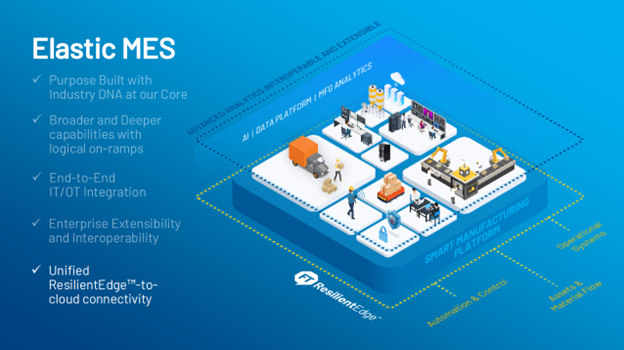
Following an initial session that covered Plex’s growth over the past year and customer successes, the Plex team introduced the concept of “Elastic MES”. As MES is “the operational backbone of the modern plant” (as demonstrated by the continued interest in a three-letter acronym that is nearly thirty-five years old), it has also undergone a number of evolutionary changes. MES has evolved from homegrown, hard-coded behemoths to so-called “COTS” (commercial off-the-shelf) solutions that required significant customization, to composable MES, which shifted the customization burden from the vendor to the end customer. With this history, I was intrigued by Plex’s concept of “Elastic MES” and what it might mean for manufacturers.
Elastic MES does not refer to ease of implementation; it is an MES that adapts and evolves as it operates. In the words of Mike Hart, Head of Product - Industry Strategy & Growth, “a platform that helps evolve, adapt, and optimize your business in real time.” This is not a single product; it is a systems approach. At the core are industry-specific workflows, data models, rules, and best practices. This is applied across a broad range of business processes, with end-to-end IT/OT integration, aiming to marry Plex’s IT experience with Rockwell Automation’s OT experience.
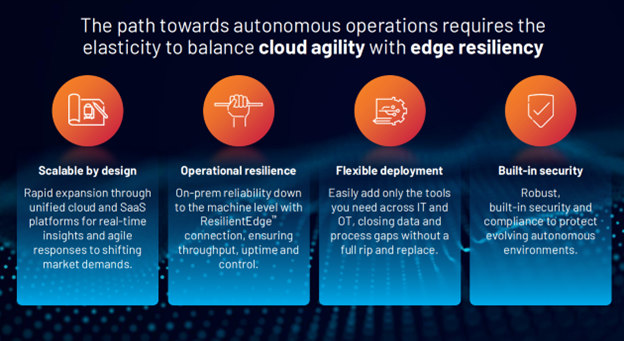
Elastic MES is extensible, resilient, and interoperable, supporting open integration with other enterprise systems. Elastic MES is delivered on a unified edge-to-cloud architecture. In effect, it is designed to deliver the agility of the cloud without compromising up time on the line. As analysts, we were initially puzzled by Rockwell’s decision to acquire Plex Systems back in 2021. Four years later, there is no question that this acquisition has benefited both Rockwell and Plex, as well as their customers. The promise of Elastic MES and the evolution toward intelligent autonomous operations are key examples.
Resilient Edge-to-Cloud: Future-Ready MES
A crucial component of achieving manufacturing autonomy is resilient edge-to-cloud connectivity. Rockwell has Plex, one of the first cloud-native MES systems, and the FactoryTalk suite, which includes MES on the edge. Their strategy is to bring these two products together and unify their portfolio. As presented by Hayden Foot, Rockwell is extending Plex with a lightweight, resilient edge component called FactoryTalk ResilientEdge. Available in Q1 2026, this will leverage the elasticity of the cloud with the resiliency of the edge. Rockwell claims this capability will enable 24/7 factory operation, as the resilient edge will react if the cloud connection is disrupted and keep IT and OT systems synchronized.
This capability is also valuable for implementing system upgrades. Upgraded components are released to a cloud repository and can be swapped into a Kubernetes cluster in standby mode without disrupting production. The final piece of the resilient edge capability is leveraging FactoryTalk Optics to display Plex MES, automation, and IIoT information to the operator on a single screen.
A decade ago, it was difficult to find a manufacturer that believed moving manufacturing software to the cloud was feasible. Some were concerned about IP protection, some about vendor lock-in, but ALL were concerned about the twin issues of availability and latency. Resilient edge-to-cloud technology, implemented appropriately, addresses both latency and availability once and for all. These new capabilities make cloud manufacturing a reality.
Software-Defined Automation: the IT-ifying of OT
There were six press conferences held specifically for analysts and media: “Transforming Manufacturing from Within”, “AI and Autonomy”, “Cyber Security”, “Sustainability Forum”, “Robotics”, and “Software-Defined Automation”. Of these, Software-Defined Automation (SDA) drew significant attention from many media and analysts, as it represents a continuation of Rockwell Automation’s journey from hardware-centricity to software-centricity.
For anyone coming from a software background, the capabilities introduced in this presentation were not earth-shattering. Yet, in the context of accelerating the evolution of OT, the topic could be viewed as revolutionary. Coming from a background in programming and testing controllers individually, the SDA capabilities presented by Dan DeYoung, Julie Robinson, and Sherman Joshua are potential game-changers.
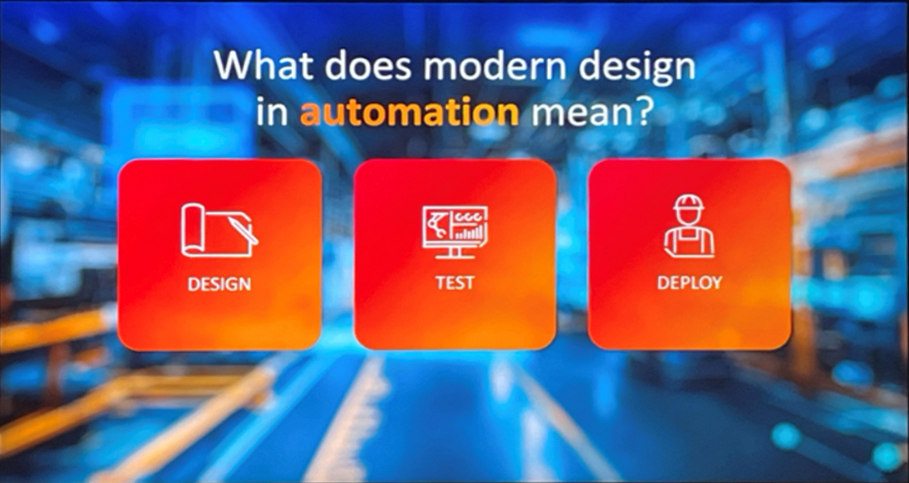
SDA allows engineers to store all their code in version control systems, so that they can track code seamlessly across tried-and-true IT elements of design, test, and deployment. Code that is documented and under version control can then enable features such as virtual commissioning.
Rockwell pointed out that the SDA is more than just a soft controller; it is changing the way automation is done. Development is done at the component level, tested virtually – including regression testing – and deployed as containerized workloads on the edge. Rockwell also stated that customers can continue to use all the OT tools they currently have. SDA does not require customers to relinquish their investment in Logix, Optics, and other installed OT infrastructure. They also stated that they expect to have Logix on a panel where customers can also run things like machine vision, robotics, and AI, all in one single package.
Rockwell’s new design environment is intentionally designed to enable concurrent development and collaborative design. Engineers across the plant can work on the same project simultaneously. It was designed to support object orientation, which makes sense to automation engineers. Concurrency enables automated regression testing. It also gives engineers the ability to decide where to deploy at the end of the process, since all development is done virtually. In practice, this creates DevOps for automation systems.
Our Take
This is certainly not the Rockwell we knew from back in the day! The culture at Rockwell Automation today is very different from what we saw in the past. They are making huge strides in cloud, edge, robotics, and AI. At the same time, they are honoring their past by providing a path forward so their customers can leverage, rather than lose, their investments in Rockwell equipment and software. I can’t wait to see what 2026 brings.
Thanks
Thanks to Michael Kane and Kristen Kubesh for the invitation and for coordinating to help me make the most of my time. I’d also like to thank Mike Kane and Michael Hart for taking the time for an in-depth conversation about Rockwell’s MES direction.
[post_title] => Rockwell Automation Fair: From Elastic MES to Software-Defined Automation [post_excerpt] => [post_status] => publish [comment_status] => open [ping_status] => open [post_password] => [post_name] => rockwell-automation-fair [to_ping] => [pinged] => [post_modified] => 2026-03-01 12:25:36 [post_modified_gmt] => 2026-03-01 17:25:36 [post_content_filtered] => [post_parent] => 0 [guid] => https://tech-clarity.com/?p=23586 [menu_order] => 0 [post_type] => post [post_mime_type] => [comment_count] => 0 [filter] => raw ) [8] => WP_Post Object ( [ID] => 23446 [post_author] => 2 [post_date] => 2026-01-28 10:38:35 [post_date_gmt] => 2026-01-28 15:38:35 [post_content] =>
How do manufacturers integrate design data (PLM) with manufacturing data (MES)?
Tech-Clarity invites you to join a research study on PLM-MES Integration. Please take about 10 minutes to fill out our survey. As a thank you, we will send you a copy of the report summarizing the findings.
In addition, eligible respondents will be entered into a drawing for one of twenty $25 Amazon gift cards. See the survey for eligibility details.
Take the survey now to share your perspective! Please feel free to forward this survey to others you feel have an opinion to share. Individual responses will be kept confidential.
Thank you for your support, please check out our Active Research page for additional Tech-Clarity survey opportunities.
[post_title] => How are Manufacturing Leaders Integrating PLM and MES?
[post_excerpt] =>
[post_status] => publish
[comment_status] => open
[ping_status] => open
[post_password] =>
[post_name] => plm-mes-2
[to_ping] =>
[pinged] =>
[post_modified] => 2026-01-28 10:38:35
[post_modified_gmt] => 2026-01-28 15:38:35
[post_content_filtered] =>
[post_parent] => 0
[guid] => https://tech-clarity.com/?p=23446
[menu_order] => 0
[post_type] => post
[post_mime_type] =>
[comment_count] => 0
[filter] => raw
)
[9] => WP_Post Object
(
[ID] => 23455
[post_author] => 2574
[post_date] => 2026-01-26 10:00:40
[post_date_gmt] => 2026-01-26 15:00:40
[post_content] =>
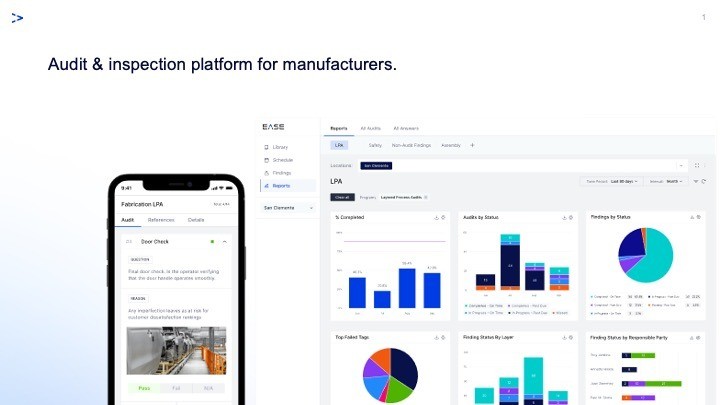
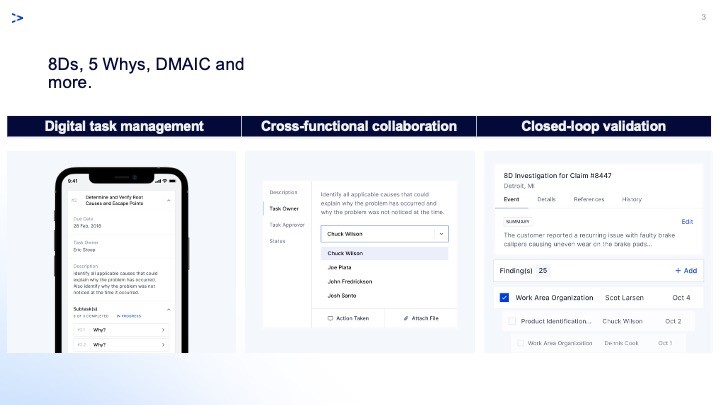
How can a strong auditing program, as practiced in major automotive suppliers, improve? By going digital. Ease.io as been doing that for years, with a SaaS software platform for Layered Process Audits (LPAs), 5S, Safety Inspections, Gemba walks, Root Cause Analysis (RCA), and problem-solving. They recently added on-the-job (OTJ) training support to strengthen customers’ outcomes.
Standardizing and Digitalizing Audit Practices
Many lean and operational excellence programs include regular audits. Audits are designed to improve quality, productivity, and safety, and nearly always do. However, using paper, spreadsheets, tribal knowledge, and legacy or homegrown software can create inefficiencies and missed opportunities. For example, if standard processes are not executed consistently or when follow-ups to issues are slow, manufacturing issues can arise and cause problems.
For over 10 years, EASE has been selling software to support these process audit activities. Customers report vastly increased audit completion rates, with up to a 90% reduction in leadtime for major audits. Allowing data to flow smoothly with less administrative burden can help LPA and other audit processes deliver their value with minimal non-value-added overhead.
New Thinking, Digital Support
Manufacturers adopting a digital platform may encounter early resistance from end-users to the change in how audits have been conducted in the past. EASE encourages customers to explore how new technologies enable them to rethink how they do things. Using integrated technology can also help identify all trends and breakdowns. It also helps to trace the root causes of problems and track whether actions have improved the situation.
One of the most significant benefits of a digital approach is the speed to identify and notify about non-conformances. Another is the ability to make audits more effective, consistent, and visible. The digital record also makes it easier to detect when corrective actions have not had the expected impact, to re-address needed issues, and truly close the loop to optimize outcomes.
Supporting Training – A New Level of EASE
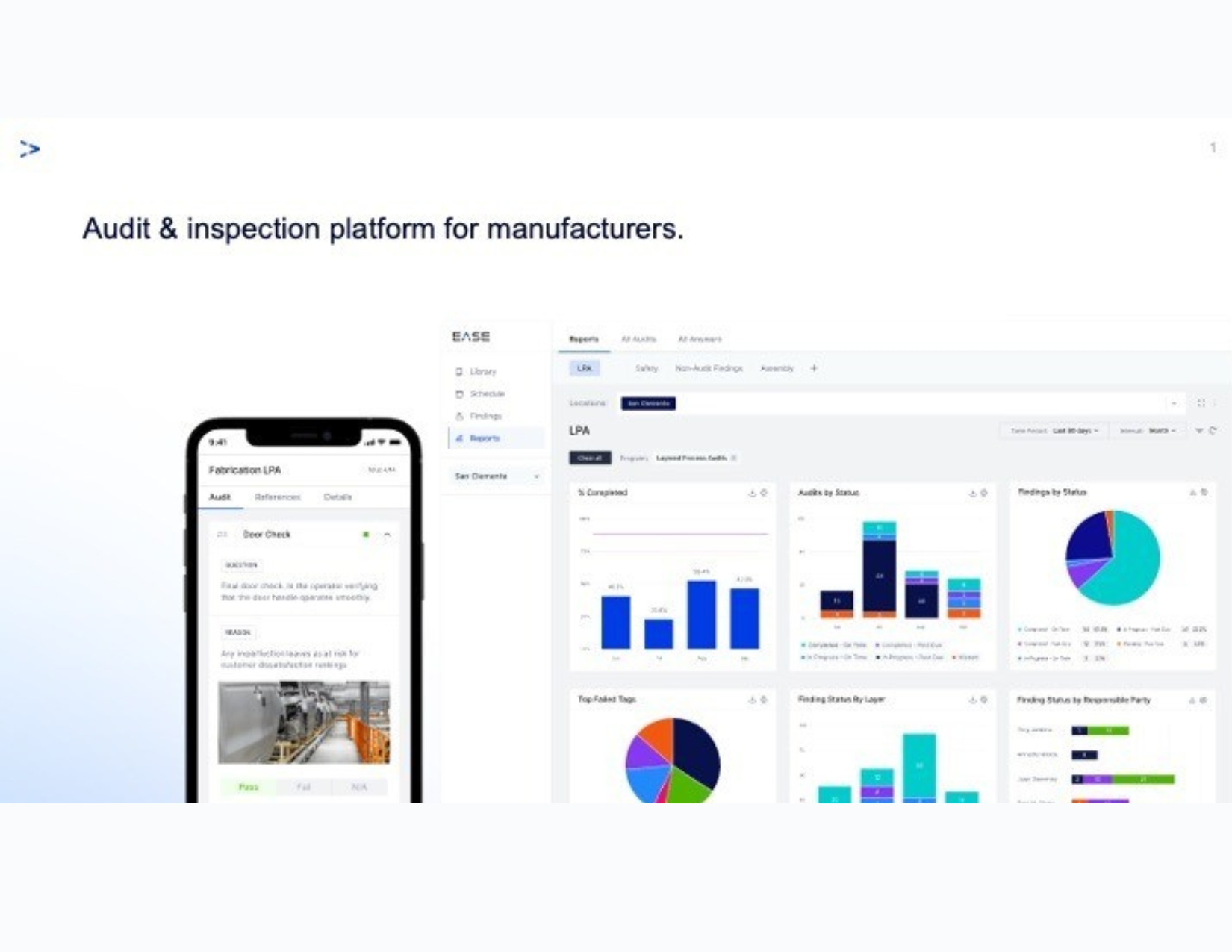
EASE is available as a SaaS subscription. The base audit & inspection version of EASE supports mobile audit and inspection checklist authoring through both pulling existing checklists and creating new ones. It also incorporates automated scheduling, findings management, and real-time data and dashboards for clear visuals of audit results. Naturally, EASE must connect to the systems of record, including QMS, MES, and CMMS. EASE Connect also enables bulk data access for BI tools and dashboarding, while Insights is their own dashboard solution that delivers custom-built dashboards specific to individual customers.
The next Level of EASE subscription includes creation and management of action plans. Action plans support collaborative RCA and analysis to document and facilitate problem investigation and understanding. Here, the EASE solution enables customers to create a library of guided problem-solving processes, milestones, and tasks. Then, the customer sets an action plan based on findings, assigning owners and approvers to each task along with due dates. Finally, this enables monitoring progress and scheduling validation tasks for sustained corrective actions.
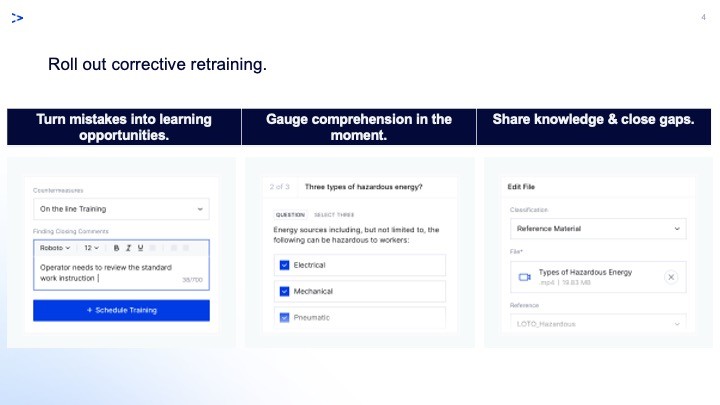
A new release from summer 2025 includes OTJ capabilities. In performing corrective actions, EASE saw a way to facilitate training. As operator errors and poor training are shared drivers of non-conformances across the customer base, this became a clear need. Customers generate training from existing documents and publish it as contextual training that is triggered from findings. It can accommodate individual or group training, quiz users, and require sign-offs after training, also checking whether it addressed the issue. With the current “gray tsunami” of knowledgeable workers retiring, this need is only increasing.
Broad Use and Impact
EASE reports that customers have achieved excellent results. These include a 20% decrease in the cost of poor quality, a 2% improvement in OEE, and a 67% decrease in time to close out findings. Better audits and process improvements lead to lower cost of poor quality, higher productivity, and improved labor efficiency.
EASE claims to have over 350 customers using EASE in more than 3,500 plants across 60 countries. Customers are in the automotive, aerospace and defense, furniture, and a range of both process and discrete manufacturing industries. It appears that in these companies, use is also growing, as EASE reports that the platform now supports over four million audits each year.
We look forward to following EASE’s continued progress and growth in the manufacturing markets. Clearly this company Is helping manufacturers rethink and improve their audit processes. Ironically, Julie Fraser met Ease.io at the Manufacturing Leadership Council’s Rethink 2025 event. Thank you, Josh Santo, John Fredrickson, and Andrea Walter, for the briefing!
[post_title] => EASE Grows by Accelerating Audits Worldwide [post_excerpt] => [post_status] => publish [comment_status] => open [ping_status] => open [post_password] => [post_name] => ease-audits [to_ping] => [pinged] => [post_modified] => 2026-02-04 16:29:14 [post_modified_gmt] => 2026-02-04 21:29:14 [post_content_filtered] => [post_parent] => 0 [guid] => https://tech-clarity.com/?p=23455 [menu_order] => 0 [post_type] => post [post_mime_type] => [comment_count] => 0 [filter] => raw ) [10] => WP_Post Object ( [ID] => 23436 [post_author] => 2 [post_date] => 2026-01-20 09:38:50 [post_date_gmt] => 2026-01-20 14:38:50 [post_content] =>
How are manufacturers approaching the AI opportunity?
We invite you to join our research study on the challenges, capabilities, and future plans manufacturers and supporting engineering (EPC) companies have for Artificial Intelligence (AI). Please take about 10 to 15 minutes to complete this short survey to share your perspective.
All individual responses will be kept confidential. Thank you for helping us understand and shape the future of AI.
As a thank you for your time, Tech-Clarity will share a copy of the final results with you.
[post_title] => AI Maturity in Manufacturing and EPC
[post_excerpt] =>
[post_status] => publish
[comment_status] => open
[ping_status] => open
[post_password] =>
[post_name] => ai-in-manufacturing
[to_ping] =>
[pinged] =>
[post_modified] => 2026-02-25 10:18:16
[post_modified_gmt] => 2026-02-25 15:18:16
[post_content_filtered] =>
[post_parent] => 0
[guid] => https://tech-clarity.com/?p=23436
[menu_order] => 0
[post_type] => post
[post_mime_type] =>
[comment_count] => 0
[filter] => raw
)
[11] => WP_Post Object
(
[ID] => 23413
[post_author] => 2572
[post_date] => 2026-01-14 10:13:06
[post_date_gmt] => 2026-01-14 15:13:06
[post_content] =>
If you are in the semiconductor industry, do you have the right development and manufacturing solution to scale the business to meet growing demand?
The semiconductor industry is entering a period of rapid growth, driven by AI, electric vehicles, autonomous systems, industrial connectivity, and rising data demands. To capitalize on this opportunity, semiconductor companies must scale to meet growing demand.
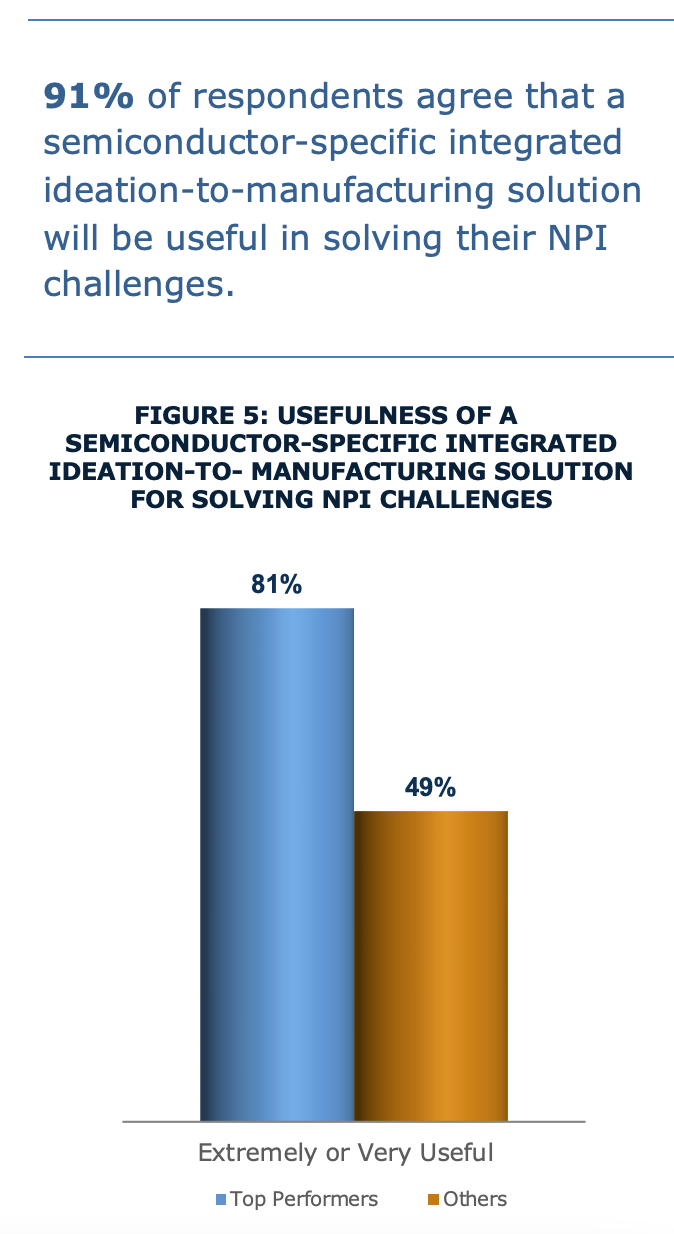
Yet, nearly all semiconductor companies report challenges with New Product Introduction (NPI), often caused by disconnected processes, limited visibility, and tools that don’t scale. Top Performers are addressing these issues by investing in digitalization and adopting PLM platforms tailored for semiconductor development. What should semiconductor companies consider to select the right solution?
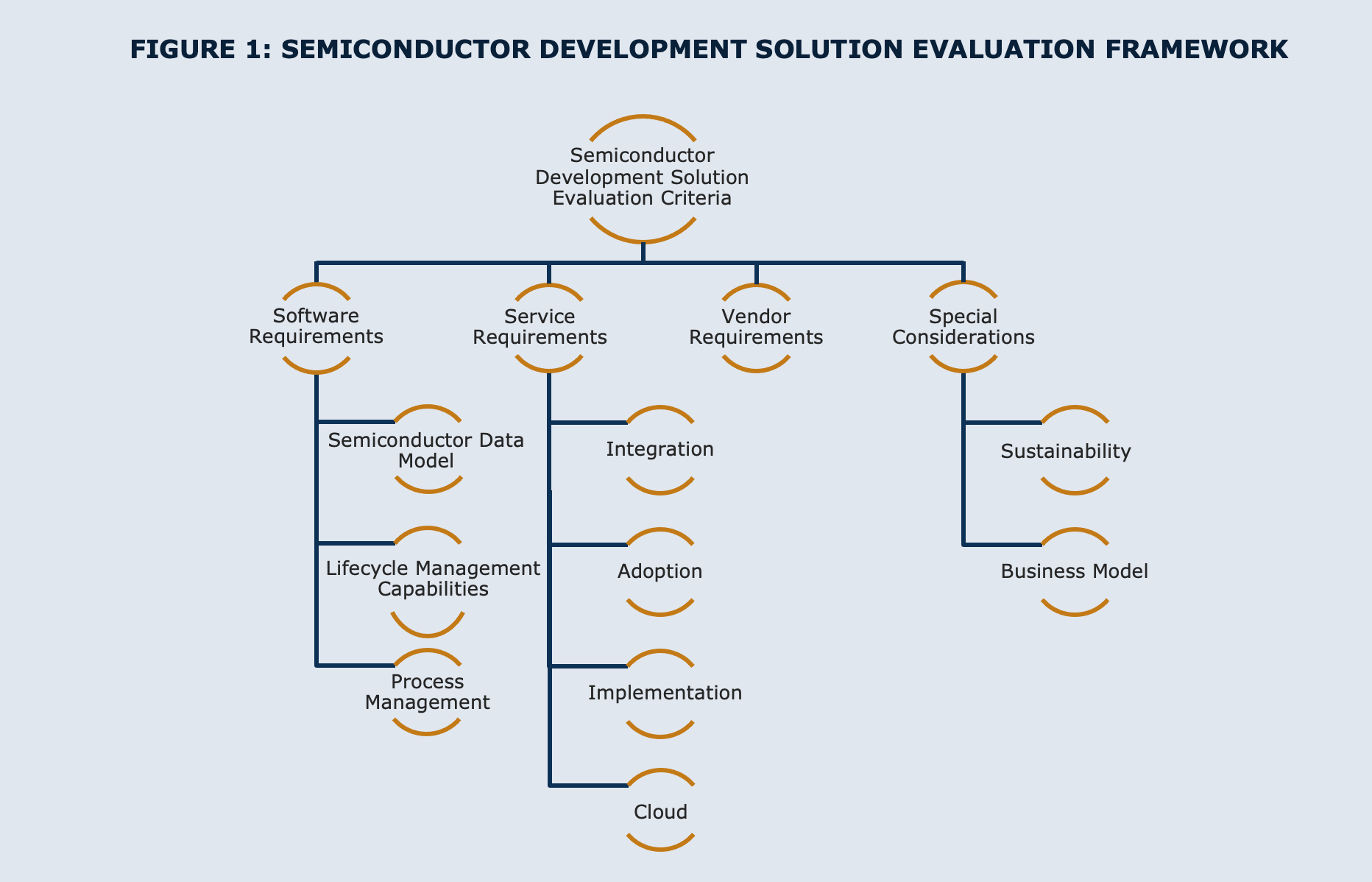
Based on a survey of 207 semiconductor and high-tech professionals, the Buyer’s Guide for Semiconductor Development: Ideation through Manufacturing outlines key buying criteria across four critical areas: software functionality, service and implementation support, vendor capabilities, and company-specific needs. Based on expert interviews and survey research, it’s designed to help semiconductor leaders evaluate solutions to invest in the tools that will support scalable, profitable growth.
Please enjoy the summary* below. For the full research, please visit our sponsor, Siemens (registration required).
To learn more about the business value of investing in development and manufacturing processes, read our survey-based research report, Three Ways Semiconductor Companies Can Prepare for Profitable Growth.
Table of Contents
- Executive Overview
- Empowering Growth
- Overcome Data and Process Management Challenges
- Ideal Development Solution for Semiconductor
- Use an Effective Semiconductor Data Model
- Leverage the Data Model with the Right Capabilities
- Manage Lifecycle Processes
- Implementation Requirements
- Vendor Requirements
- Identify Unique Company Need
- Conclusions
- Recommendations
- Acknowledgments
- About the Author
Executive Overview
The semiconductor industry is poised for significant growth, fueled by advancements in artificial intelligence (AI), investments in electric vehicles, innovations in autonomous driving, enhanced industrial connectivity, and the rising demand for data storage. This is creating substantial opportunities for the sector, which is reflected in the impressive 19% year-over-year increase in semiconductor global sales in 2024. This double-digit growth is expected to continue as forecasts project that the market could soar to $1 trillion by 2030. To capitalize on this momentum, semiconductor companies are expanding into new markets, diversifying portfolios, and accelerating time to market. To succeed with these goals, they will need to build on their existing expertise and scale their operations. Top Performing semiconductor companies are supporting their growth by adopting Product Lifecycle Management (PLM) solutions, advancing digitalization, and improving process efficiency. Yet, growth comes with challenges. Nearly all surveyed semiconductor companies (99%) report difficulties with New Product Introduction (NPI). Additionally, customer expectations for faster NPI and high-quality products have increased since 2020. Many struggle with disconnected processes, limited visibility, and solutions that don’t scale, placing the burden on internal teams. The right PLM platform, tailored for the semiconductor industry, can help businesses overcome these challenges, while empowering them to achieve their goals. This buyer’s guide outlines the capabilities needed in a PLM solution tailored for semiconductor development. It includes checklists across four areas: software functionality, services, vendor attributes, and company-specific needs (Figure 1). Insights are drawn from a survey of 207 semiconductor and high-tech professionals on the tools and approaches that drive the most business value.
Empowering Growth
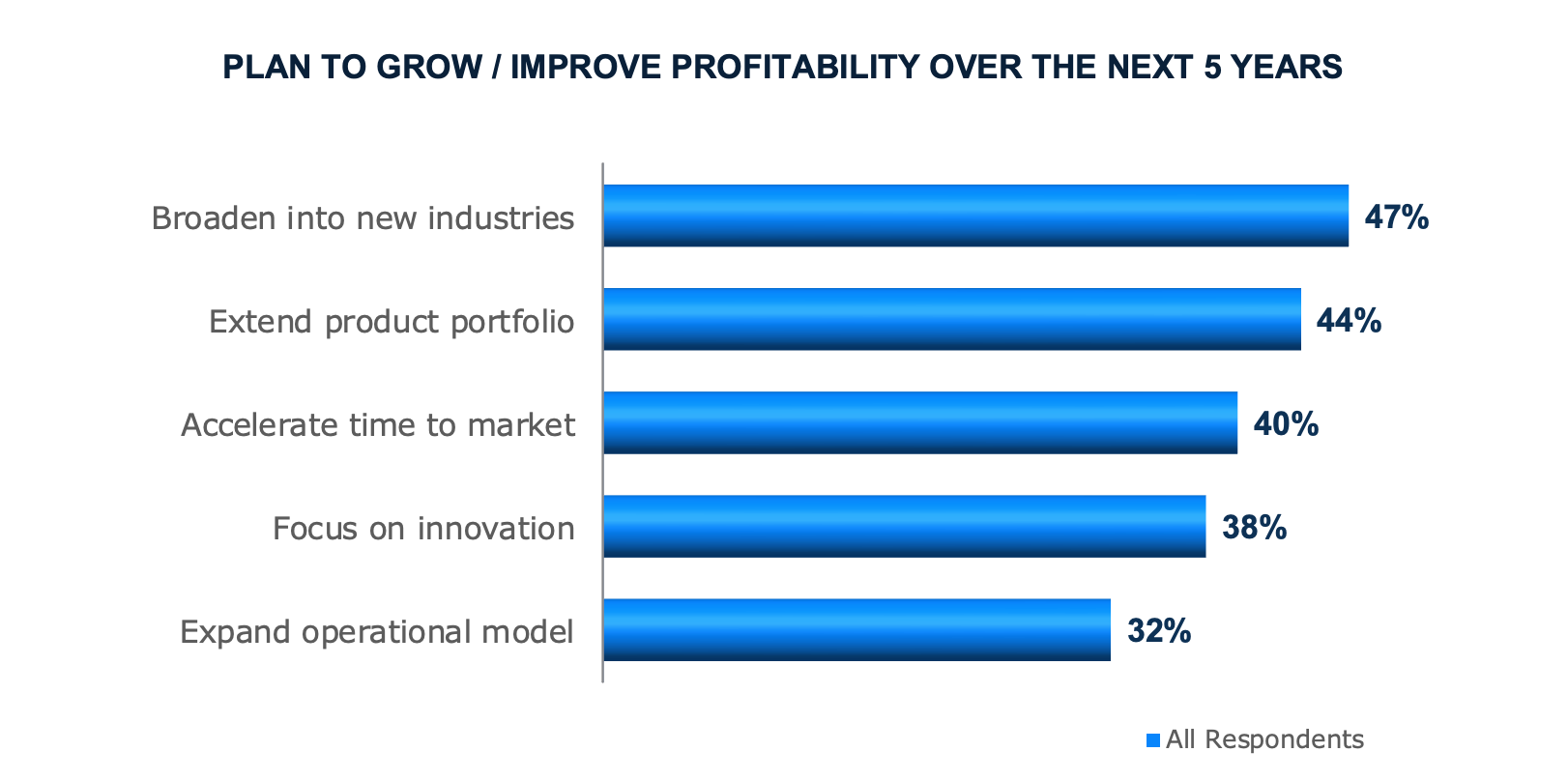
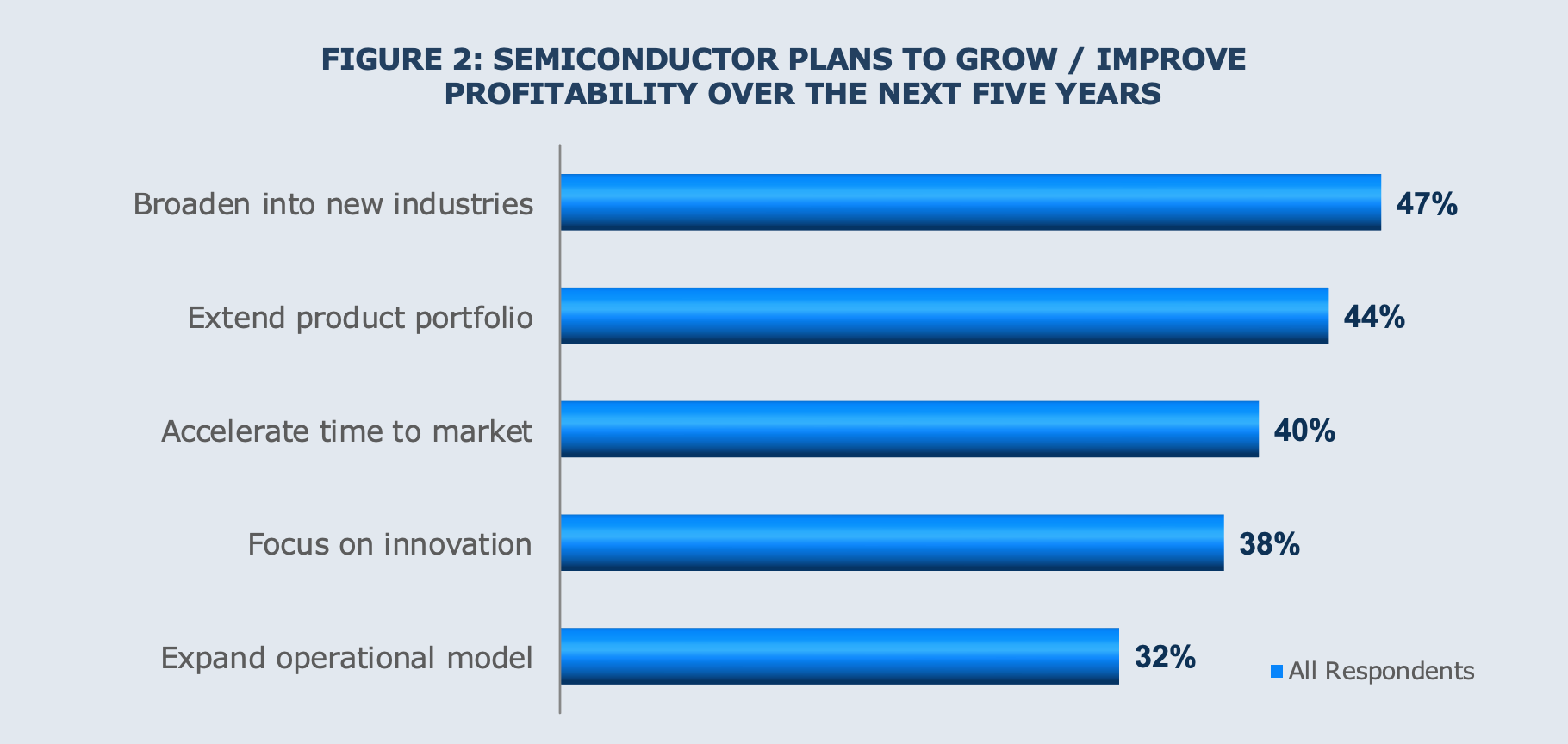
To stay profitable over the next five years, semiconductor companies are targeting new industries, expanding product portfolios, accelerating time to market, boosting innovation, and evolving their operational models (see graph).
By diversifying into different industries and broadening their portfolios, semiconductor companies can adapt their existing expertise and innovations for new applications and high-growth areas that require specialized chips like AI, electric vehicles, and autonomous driving. Not only does this open new revenue streams, but it also reduces development costs and improves margins. It also helps offset demand shifts, such as slowing mobile phone sales.
However, managing multiple product lines adds complexity, necessitating efficient processes to encourage reuse and streamline development. Improving how they manage and integrate data can help.
Ideal Development Solution for Semiconductor
To uncover what drives leading performance, Tech-Clarity surveyed 207 semiconductor and high-tech professionals and identified “Top Performers” as the top 25% that outperform their competitors in metrics that indicate business success. These metrics were:
- Revenue growth over the last 24 months
- Profit margin expansion over the previous 24 months
- Percent of sales from new products
- Product cost reduction over the last 24 months
- Greater project visibility
- Better risk management
- Enhanced NPI efficiency
Recommendations
Based on industry experience and research for this report, Tech-Clarity offers the following recommendations:- Plan for long-term growth and scalability across product lines, departments, and engineering silos.
- Use high-level requirements such as those in this guide to evaluate solutions based on business fit before engaging in detailed evaluations.
- Choose a solution that supports the unique workflows of the semiconductor industry.
- Ensure the solution covers all lifecycle stages to support NPI, product and characterization requirements, IP management, technology development, chip design, tapeout and mask management, and BOI and BOP management.
- Invest in digital thread capabilities for end-to-end traceability and efficiency.
- Prioritize integration of design and manufacturing data.
- Address the needs of all roles involved, from concept to manufacturing, to drive adoption.
- Select a vendor with semiconductor expertise who can act as a trusted partner.
*This summary is an abbreviated version of the ebook and does not contain the full content. For the full research, please visit our sponsor, Siemens (registration required).
If you have difficulty obtaining a copy of the research, please contact us.
[post_title] => Semiconductor Buyer’s Guide: Ideation through Manufacturing
[post_excerpt] =>
[post_status] => publish
[comment_status] => open
[ping_status] => open
[post_password] =>
[post_name] => semiconductor-buyers-guide
[to_ping] =>
[pinged] =>
[post_modified] => 2026-02-25 13:53:10
[post_modified_gmt] => 2026-02-25 18:53:10
[post_content_filtered] =>
[post_parent] => 0
[guid] => https://tech-clarity.com/?p=23413
[menu_order] => 0
[post_type] => post
[post_mime_type] =>
[comment_count] => 0
[filter] => raw
)
[12] => WP_Post Object
(
[ID] => 23383
[post_author] => 2572
[post_date] => 2026-01-13 09:51:56
[post_date_gmt] => 2026-01-13 14:51:56
[post_content] =>
How can design engineers balance conflicting time, cost, and quality goals?
As businesses and products grow in complexity, design engineers have much to consider to produce optimal product designs. This is particularly true for smaller and medium-sized businesses (SMBs) that struggle with the same challenges as their larger counterparts, but have fewer resources to address them. What are the most successful SMBs doing to manage this? This research explores this question.
Based on a survey of 230 respondents, this research study examines engineering practices and simulation use. It identifies how executives at SMBs (companies with revenues less than a billion US dollars) can realize higher development returns through simulation-driven design, which should lead to increased profitability.
Please enjoy the summary* below. For the full research, please visit our sponsor, Siemens (registration required).
Table of Contents
- Executive Summary
- What Does Product Success Mean?
- Business Complexity Creates Engineering Challenges
- Product Complexity Complicates Engineering Decisions
- Identifying Top Performers
- How to Address Growing Complexity
- Addressing Complexity with Technology
- Use Simulation throughout All Lifecycle Stages
- How to Adopt Simulation-Driven Design
- The Business Value of Simulation-Driven Design
- Recommendations
- About the Research
- Acknowledgments
Executive Summary
Increasing Complexity
Engineers have much to consider to design products with the best chance of market success. Products must be high quality, economical, and fast to market. However, as business environments and products become more complex, old ways of working may no longer be enough. Engineers need better methods to navigate the complexity of their engineering and design decisions to meet their goals. This can be especially challenging for a resourced-constrained smaller or medium size business (SMB).
What SMB Top Performers Do
Despite this complexity, Top Performers have implemented practices that allow them to be 2.1 times more likely to have highly effective processes to understand trade-offs. To achieve this, they increase their use of simulation and invest in more software capabilities. Unlike their less successful competitors, they leverage simulation throughout the entire product development lifecycle, supporting a simulation-driven design approach. In fact, SMB Top Performers are 75% more likely than Others to use simulation at the concept phase, and they continue to use it from this early stage through testing.
This is such a powerful approach that 99% of SMBs using simulation to explore design ideas report finding value. They report benefits such as better products, greater productivity, faster innovation, and a higher return on their development investments.
The Right Solution
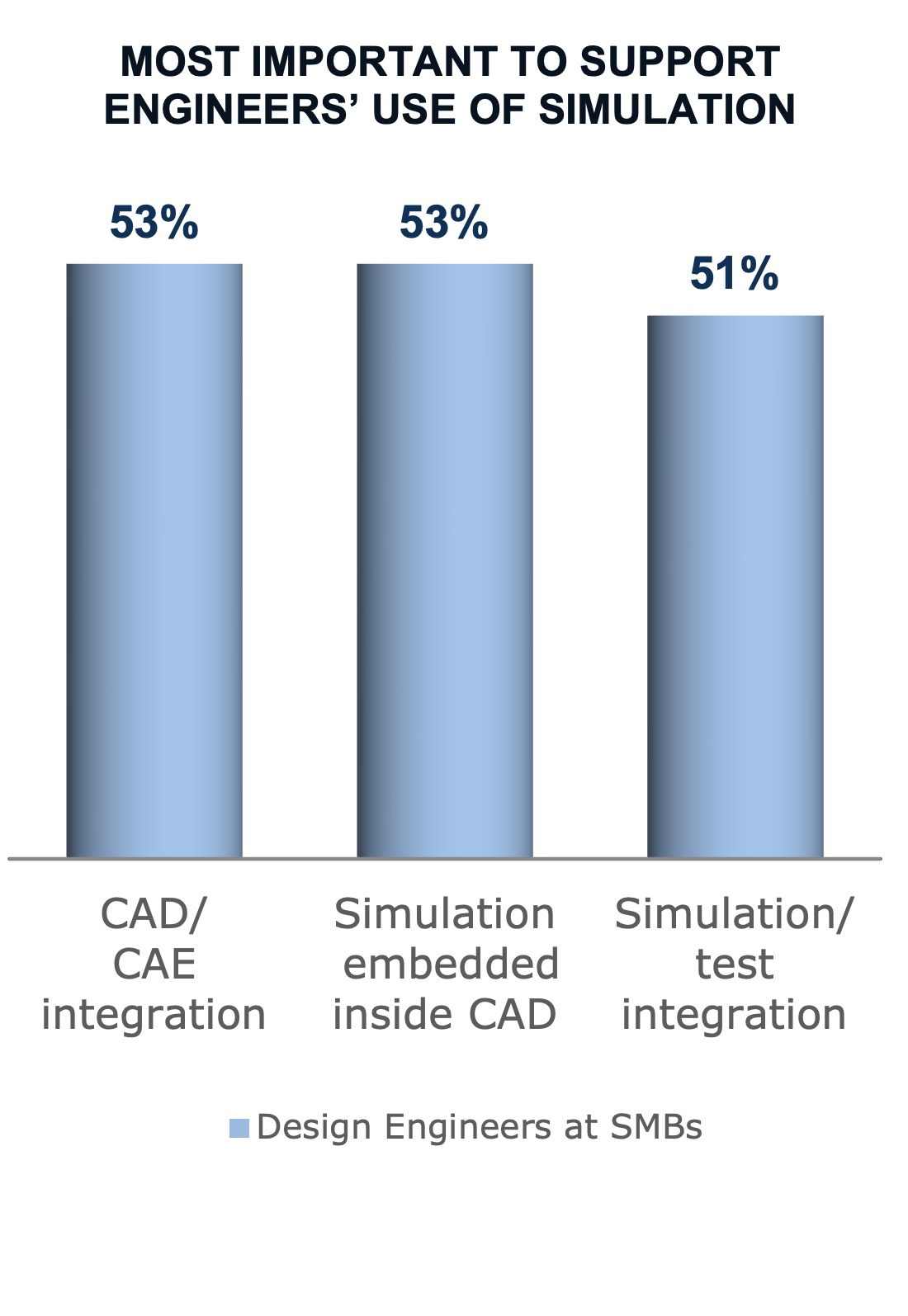
Part of successfully adopting this approach requires using the right solution and technology. Design engineers report that CAD/CAE integration and embedding simulation inside CAD are the most important solution qualities to support their use of simulation.
This Research Report
This report shares research findings that provide an in-depth look at why today's engineers at SMBs have so much more to consider than they did even just ten years ago. Design decisions are even more complicated, and simply relying on experience is no longer sufficient. The research reveals what the most successful SMBs do to address this, helping them to release more successful products and improve their profitability.
Product Complexity Complicates Engineering Decisions
Significant Product Complexity
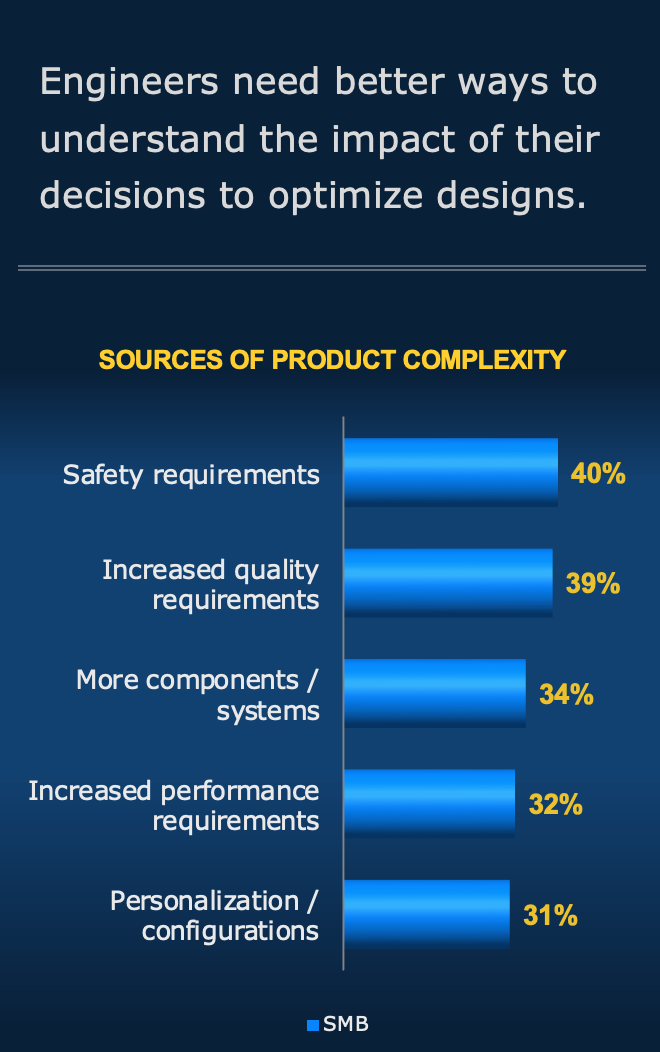
While business complexity has created a challenging environment, the products have also become more complex, creating even more difficulties for engineers. The graph shows the top sources of product complexity. Much of this complexity comes from increased requirements.
More Requirements
With increased regulations, engineers have more safety requirements to deal with. As we saw earlier, quality is critical to product success, and this is driving more quality requirements. Customers also expect high performance, which is vital for competitive differentiation. Yet, innovation requirements have increased the number of components and systems, creating more factors to consider and making it even harder for engineers to understand the impact of their decisions. They need better ways to understand this to optimize designs and avoid inadvertently introducing errors. They also need to validate and verify requirements.
Getting this insight as the engineer works on it is the most efficient use time, especially compared to waiting weeks or months for physical test results when the design details are no longer fresh in the engineer's memory. Not to mention, the later it is in the design process, the more a design has solidified, meaning changes will impact far more components. Any error or overlooked impact will result in errors that can increase costs, cause delays, and hurt quality.
More Configurations
Finally, as companies need to appeal to various market and customer needs, engineers must manage multiple product configurations. Each variant must also meet safety, quality, and performance requirements, adding further complexity while increasing the risk of missing the mark on critical product success factors.
How to Adopt Simulation-Driven Design
Integrated Design and Analysis
Regardless of performance, design engineers agree on what helps them use simulation the most. Integrated simulation and design tools and simulation embedded inside CAD are the commonly identified features. These features make simulation more accessible to design engineers and provide a way to access the functionality without disrupting their workflow. Plus, engineers stay in a familiar environment.
Integrated Test and Simulation
Beyond making simulation easier to access, most design engineers also appreciate when simulation and test are integrated. As discussed previously, this can help reduce test time. At the same time, engineering teams can benefit from access to test results to improve future simulation models to catch problems caught during physical testing.

Recommendations
Recommendations and Next Steps Based on industry experience and research for this report, Tech-Clarity offers the following recommendations for SMBs:- Consider the complex business environment in which engineers must work and ensure they have solutions to enable them to develop successful products. To be competitive in today’s global market, it is critical that products are high-quality, yet low cost and still get to market quickly.
- Understand the factors driving product complexity and empower engineers to navigate it with ways to understand the impact of their decisions so that they can optimize their designs. Simulation is the most common tool SMBs use to manage complexity as it can help balance competing criteria such as cost and quality, while guiding decisions so that products will be more competitive.
- Adopt or increase your use of simulation throughout design to support a simulation-driven design approach, starting at the concept phase, and continuing all the way to physical testing. Top Performers are 75% more likely than Others to start using it at the concept phase
- Use a solution that will empower design engineers to use simulation without disrupting their workflow with features such as CAD/CAE integration or embedded inside CAD, simulation and test integration.
How can semiconductor companies establish a foundation to scale and profitably grow?
The semiconductor industry is projected to experience substantial growth over the next five years. How can semiconductor companies position themselves to take advantage of this growth and increase their profits? What challenges should they overcome to scale and grow the business?
Based on a survey of 207 semiconductor and high-tech professionals, this research study examines semiconductor companies' growth strategies. It identifies challenges related to new product introduction (NPI) challenges that hinder their progress. The research reveals best practices for overcoming these challenges and shares recommendations for establishing a foundation for scalable and profitable growth.
Please enjoy the summary* below. For the full research, please visit our sponsor, Siemens (registration required).
Table of Contents
- Executive Summary
- Plans for Profitable Growth
- NPI Challenges
- Identifying Top Performers
- Establish a Foundation for Profitable Growth
- 1. Support Digitalization with a Digital Thread
- 2. Focus on Process Efficiency
- 3. Adopt a Product Lifecycle Management (PLM)
- Become More Sustainable
- Recommendations and Next Steps
- About the Research
- Acknowledgments
Executive Summary
Significant Opportunity It is an exciting time for the semiconductor industry as it once again becomes a key enabler for the next evolution of technology and experiences substantial growth. This growth is so significant that many project the global semiconductor market to reach $1 trillion by 2030. In fact, 2024 saw global sales increase a tremendous 19% year-to-year, and double-digit growth is expected to continue. This growth is fueled by progress like the rise of artificial intelligence (AI), investments in electric vehicles, advancements in autonomous driving, connectivity growth in industrial machinery, and an increasing demand for data storage. This presents a tremendous opportunity for semiconductor companies. However, to capitalize on this potential, they must have the right foundation to support profitable growth. Growth Plans Semiconductor companies aim to grow by broadening into new industries, extending their portfolio, and accelerating their time to market. At the same time, since 2020, customers expect more. They now demand higher quality and faster NPI. To successfully achieve this, there are several NPI challenges they must overcome. They must improve change management, understand dependencies, centralize requirements, and enable traceability. To meet these needs, the most successful companies are adopting Product Lifecycle Management (PLM), supporting digitalization, and improving process efficiency. By doing so, they can meet increased demand and achieve greater success. Integrating Design and Manufacturing One major difference between Top Performers and Others is that they are more likely to integrate their design and manufacturing data. This integration allows them to:- Improve project visibility
- Manage risk
- Improve NPI efficiency
Plans for Profitable Growth
Growth Opportunities With the expected growth in the semiconductor industry, semiconductor companies must strategize to determine the best ways to tap into these opportunities and profitably grow. Over the next five years, they plan to grow by broadening into new industries, extending their portfolios, and accelerating their time to market (see graph).
Expand Offerings
By venturing into new industries and broadening their portfolios, semiconductor companies can leverage their existing expertise and innovation investments while tailoring offerings for different use cases. For example, AI, electronic vehicles, and autonomous driving all require specialized chips. By adapting their offerings for these various applications, semiconductor companies can unlock new revenue opportunities. Additionally, reworking existing offerings for specific applications reduces development costs for adjacent offerings, thereby boosting profit margins. Moreover, diversification can help mitigate risks associated with fluctuating demand in specific segments, as experienced with mobile phones in the past. However, overseeing the development of various offerings introduces complexity that must be managed, especially to encourage and support reuse.
Accelerate Time to Market
The cyclical nature of the semiconductor industry means timing is crucial. Being the first to market allows a company to seize emerging trends and technological advancements ahead of competitors, thus gaining a competitive edge by capturing market share before rivals respond. This strategy also maximizes the revenue potential of new offerings before the next generation emerges. To achieve this goal, companies must find ways to improve process efficiency.
Innovation
Semiconductor companies face many opportunities for innovation, especially to meet the demanding requirements of AI applications. Those that can improve performance and reduce power consumption better than competitors should capture a substantial share of that market segment. Capabilities that foster collaboration and leverage existing expertise should help to generate new ideas and solutions to accelerate innovation.
Become More Sustainable
Sustainability Strategy
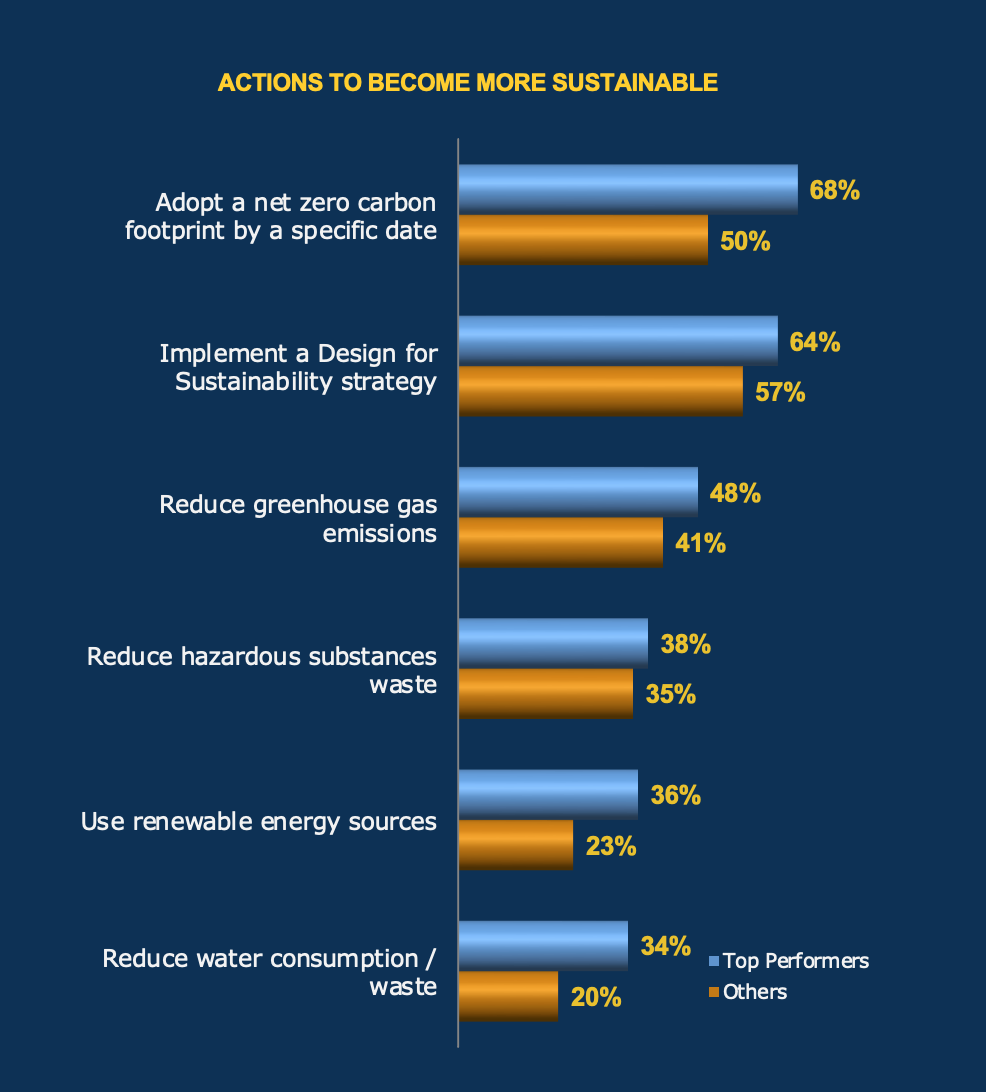
Once semiconductor companies establish a foundation for growth, another important consideration that can provide a competitive advantage is sustainability. While only 15% of companies reported that sustainability is part of their growth plans, an impressive 97% of Top Performing semiconductor companies have implemented a sustainability strategy.
A well-defined sustainability strategy can give a semiconductor company a competitive edge. Many customers increasingly focus on producing energy-efficient, sustainable products with a reduced carbon footprint. Consequently, these customers are more likely to engage with semiconductor companies that prioritize sustainability. The graph shows the top actions taken by Top Performers to become more sustainable
Leverage the PLM Foundation for Sustainability
With the integration of data through a semiconductor PLM platform, companies can also utilize this information to support their sustainability initiatives. By employing digital technologies such as digital twins, simulations, analytics, and BOM roll-ups, companies can evaluate sustainability factors like the carbon footprint from the early stages. This helps understand the impact of different scenarios or options, enabling businesses to identify the best strategies for achieving their sustainability goals. The collaboration tools, supplier management capabilities, and integrated data provided by PLM can assist in capturing the necessary information for these assessments and enabling more informed decision-making.
Recommendations and Next Steps
Recommendations and Next Steps Based on industry experience and research for this report, Tech-Clarity offers semiconductor companies the following recommendations to scale and support profitable growth:- Support digitalization with a digital thread. Digitalization provides capabilities to improve efficiency. A digital thread creates the traceability needed to overcome many of the top NPI challenges that slow semiconductor companies down and hurt quality.
- Focus on process efficiency. In the semiconductor industry, time to market is critical to success. Focus on digital workflows to achieve greater levels of efficiency.
- Integrate design and manufacturing data. Integrating data creates a digital thread and traceability, supporting digital processes and streamlining change management.
- Adopt PLM. PLM serves as a platform to integrate design and manufacturing data, create a digital thread, and support digital processes.
- Become more sustainable. While sustainability may not be an important growth strategy, it can offer a competitive advantage, especially with customers focused on reducing their carbon footprint.
*This summary is an abbreviated version of the ebook and does not contain the full content. For the full research, please visit our sponsor, Siemens (registration required).
If you have difficulty obtaining a copy of the research, please contact us.
[post_title] => Three Ways Semiconductor Companies Can Prepare for Profitable Growth
[post_excerpt] =>
[post_status] => publish
[comment_status] => open
[ping_status] => open
[post_password] =>
[post_name] => semiconductor-growth
[to_ping] =>
[pinged] =>
[post_modified] => 2026-01-12 10:26:11
[post_modified_gmt] => 2026-01-12 15:26:11
[post_content_filtered] =>
[post_parent] => 0
[guid] => https://tech-clarity.com/?p=23350
[menu_order] => 0
[post_type] => post
[post_mime_type] =>
[comment_count] => 0
[filter] => raw
)
[14] => WP_Post Object
(
[ID] => 23317
[post_author] => 2572
[post_date] => 2026-01-07 09:41:13
[post_date_gmt] => 2026-01-07 14:41:13
[post_content] =>
How can automotive manufacturers improve engineering productivity?
It's an inspiring time for the automotive industry. Innovations through electrification, automation, and more are revolutionizing the industry like never before. Vehicles continue to be more comfortable, safer, and fuel-efficient, while new service offerings present further opportunities for innovation. All of this relies on the engineering team’s ability to deliver. Unfortunately, engineers regularly lose productivity to non-value-added tasks that not only rob them of their ability to innovate, but also threaten their company’s ability to compete, differentiate, and grow. Imagine the potential of identifying and removing the most common non-value-add activities engineers face and empowering them to focus on better vehicles, components, and systems.
This research examines how engineers spend their time, where they lose productivity, and the impact on the business. It then identifies solutions and approaches to reduce time wasters. Based on a survey of 228 manufacturers across industries, this report focuses on automotive companies and looks at the challenges and opportunities from their perspective.
Please enjoy the summary* below. For the full research, please visit our sponsor, Siemens (registration required).
This report is based off the research published in The Business Value of Reducing Engineering Time Wasters which takes a look across all industries.
For other industry-specific related research, read our Reducing Engineering Time Wasters reports for:
To received personalized recommendations for how your company could improve engineering productivity, take our 5-minute online assessment.
Table of Contents
- Executive Summary
- Product Development is Critical to Business Strategies
- The Time Wasters
- Implications of Time Wasters to the Business
- A Solution to Avoid Time Wasters
- Business Value from PLM
- Extending PLM Use Results in Greater Satisfaction
- How Companies Implement PLM
- Additional Values Due to the Cloud
- Conclusions
- Recommendations
- About the Research
- Acknowledgments
Executive Summary
Engineers Impact Business Success
Automotive companies’ ability to deliver exceptional offerings is critical to success. Likewise, their engineers are crucial to ensuring vehicles, components, and systems have what it takes to succeed in the market. Therefore, empowering engineers is key to the successful execution of business strategies.
Too Many Time Wasters
Unfortunately, engineers report spending too much time on non-value-added work with too many interruptions, taking them away from critical innovation work. Furthermore, 97% of surveyed automotive companies say this loss in engineering productivity comes at a significant business cost due to missed deadlines, higher costs, and less innovation. To overcome productivity losses, one approach is to manage product data and processes better and make it accessible to those who need it, when they need it.
Reclaiming Wasted Time
This report identifies major engineering time wasters in the automotive industry. It explores how companies of all sizes reclaim lost time by examining the use and value of PLM (Product Lifecycle Management) solutions to centralize data, manage processes, and collaborate better. PLM users reported fewer changes due to outdated information and errors, significantly reducing non-value-added work and shortening development times. This report also examines how companies select and use PLM solutions, including cloud-based implementations.
The Time Wasters
What Slows Engineers Down? The graph identifies the top engineering time wasters automotive companies face. The findings highlight how much engineers waste on non-value-added work. They need better ways to automate tedious tasks so they can focus more energy on adding value. Limited Reuse Vehicles have become increasingly complicated, evolving into complex interconnected systems of mechanical components, electronics, and software. The more engineers can leverage compliant, proven, and tested subsystems and components, the more time they will save. This also reduces the risk of introducing errors and missing requirements. However, the number of components across multiple engineering domains and suppliers, makes it very difficult to find needed data, and searching for it wastes valuable time. Also, platform designs require managing complex configurations which consumes even more time. To avoid these issues, engineers need suitable methods for finding what they need and managing configurations. Time Preparing for Manufacturing Engineers also invest significant time gathering all required data to release to manufacturing. Any data inaccuracies can result in costly scrap, rework, and delays. Further, any changes significantly impact production, especially when multiple facilities are affected. Engineers need ways to quickly gather all necessary data with its dependencies, and automated workflows to manage the release process, especially when relying on third parties such as suppliers or OEMs. Interruptions Constant interruptions to answer questions, share data, and provide updates also slows engineers down. These interruptions break an engineer's train of thought and take them away from other work. Redoing Work Engineers also waste efforts redoing work. They recreate it when they can’t find it or must fix errors due to outdated information. Better methods to centralize data would help get that time back. Poor Collaboration Finally, companies find that poor collaboration also wastes time. This is especially critical for automotive companies given the number of engineering domains involved.A Solution to Avoid Time Wasters
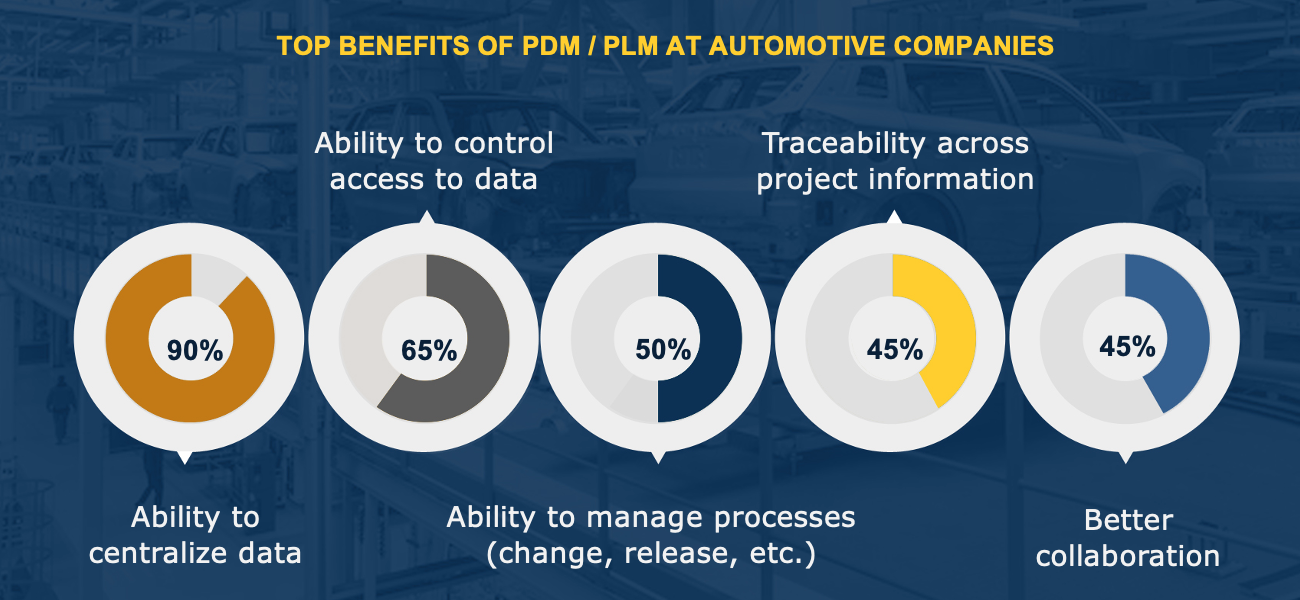
How PLM Reduces Time Wasters We will now focus on how PLM can be a potential solution to reduce engineering time-wasters. Automotive companies that have implemented PLM experience many benefits (see lower graphic). Engineers at automotive companies pointed to centralizing data as a top PLM benefit. Centralizing data makes it easier to find and allows them to effectively manage processes, such as engineering changes and release processes. They can also improve collaboration and traceability across projects. More automated processes and centralized data mean PLM users waste less time searching for data, and data stays up-to-date, so they don't have to recreate work if they can't find it or redo it because they used outdated information. Also, centralized data means others have easier access to what they need, when they need it, so engineers are interrupted less. This is especially critical with the multidomain systems typical in the automotive industry. Engineering Changes On top of this, respondents from automotive companies report that PLM reduces many sources of changes (see graph on right). Engineering changes resulting from these issues squander time, taking them away from innovation efforts that add more value. Avoiding these issues will save engineers significant time.
Conclusions
Reclaiming Lost Time Automotive companies prioritize their future growth and sustained success on winning in the marketplace with better, differentiated offerings. To support this, they can boost their product development capabilities significantly by eliminating time wasters that consume engineers' valuable time. Automotive companies find that PLM can empower their engineers to innovate by significantly reducing engineers' time on non-value-added tasks. As a result, they can enjoy a competitive advantage. In addition, technological advances, such as cloud-based offerings, can reduce implementation time, cost, and difficulty, making PLM more accessible.Recommendations
Next Steps
Based on industry experience and research for this report, Tech-Clarity offers the following recommendations to automotive companies:
- Consider the business impact of engineering time wasters on your company and make investments to minimize them. Empowering engineers to focus more time on value-added work will enable you to get to market faster with better, more differentiated offerings.
- Consider how challenging it can be to find and recruit engineering talent in today’s business climate. Freeing engineers from time-wasting tasks can help take some pressure off your existing staff, improving their work environment and productivity, increasing job satisfaction, and reducing the need to add more staff.
- Look at PLM as a potential solution to reduce engineering time wasters. Automotive companies report that PLM offers benefits such as centralizing data, managing processes, and improving collaboration. This frees engineers from tasks that waste their time so they can focus more on engineering and innovation.
- Use PLM for more than managing data. Those most satisfied with PLM also use it to manage engineering change processes, access control, requirements, and release processes.
- Extend the use of PLM to a broader audience beyond engineering. Those most satisfied with it include management, manufacturing, quality, and sales as users.
- Select a solution that has the flexibility to configure to your processes. An overwhelming 74% who found the implementation easy, identified this as helpful to the implementation.
- Consider a cloud solution. Interestingly, 78% of those who implemented a cloud solution considered the deployment easy and implemented it in half the time required by those using a non-cloud solution.
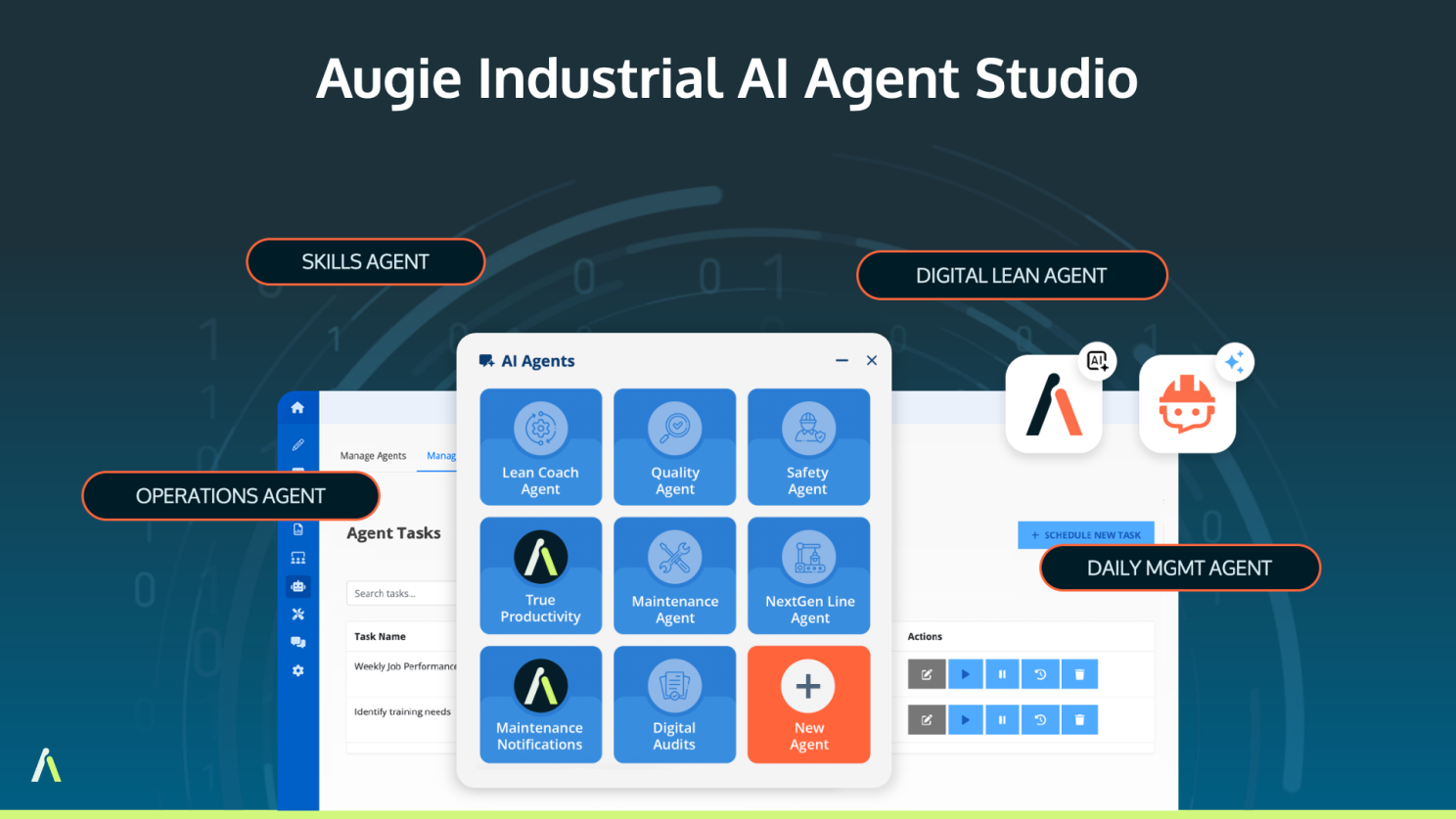
What would add value to a comprehensive, AI-based connected frontline worker (CFW) platform? Augmentir has added more customized and agentic AI, and we see considerable potential benefits. This company launched in 2019 with AR and deep machine learning-based AI, and has most recently added a no-code industrial AI agent studio. This is an addition to their GenAI-based Augie capabilities that span the platform.
Two-Way Frontline Data Flows
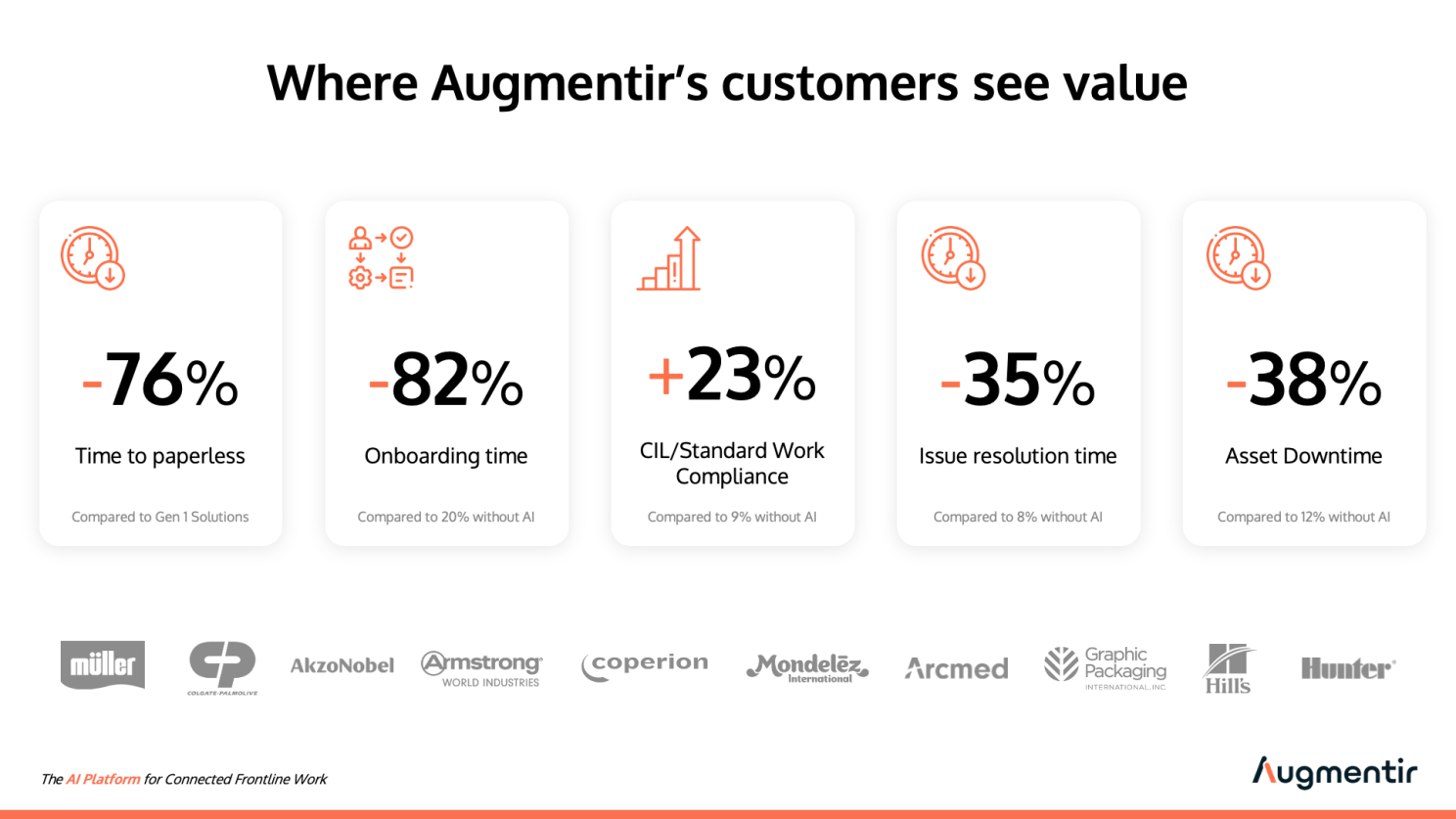
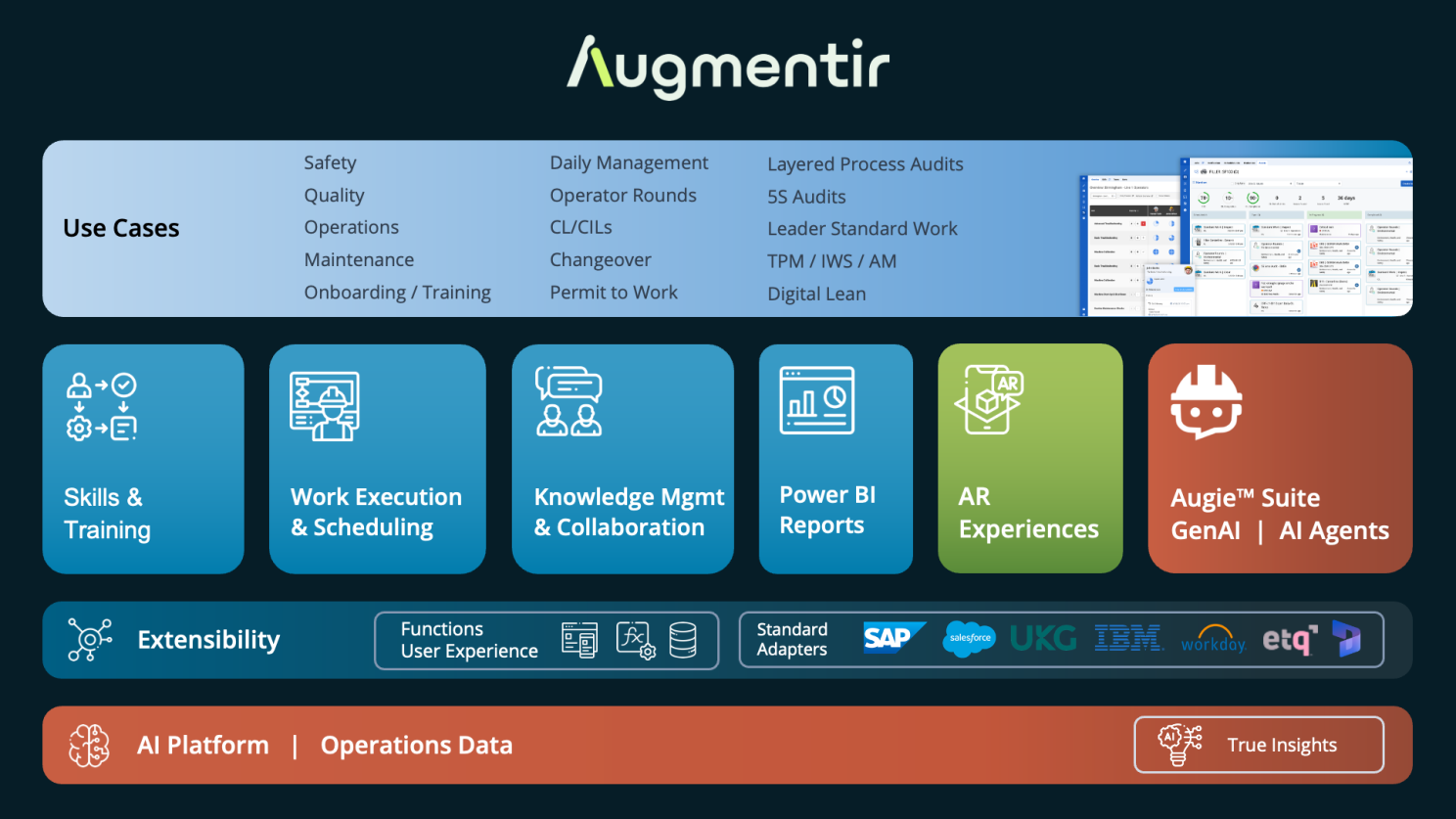
Augmentir set out to address “the impact of a smaller, less skilled, and less experienced frontline workforce” and is making headway in building out the software and the customer base. The concept is to have a single pane of glass where a frontline worker gets everything they need, in context, and nothing more. The platform integrates with a wide variety of plant and enterprise software for training and daily work.
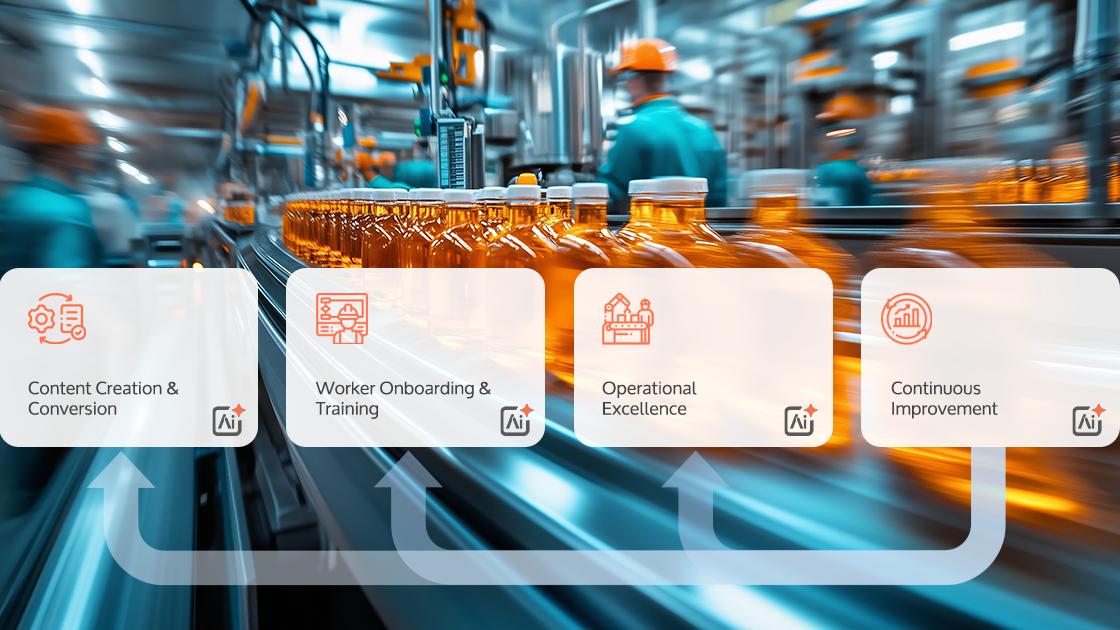
Augmentir’s platform includes what most CFWs do: content authoring and conversion for instructions, a skills matrix, knowledge management, and sharing. It delivers any needed training based on the user’s profile and previous experience with a particular task in the flow of work. It also includes data visualization and reporting, with Microsoft’s Power BI embedded in the Augmentir platform. The founders also have an augmented reality background, so leveraging that immersive approach is native.
Where it differs from other CFWs: Augmentir aims to close the loop with machine-learning style AI, analyzing data from the operation to identify top opportunities for continuous improvement. As work proceeds day-to-day, deficiencies or errors in performing tasks appear by task, machine, worker, or cohort of workers. They call these True Insights. These indicate not only where more training might be needed, but also where to focus efforts to improve process efficiency, instruction clarity, or safety.
What’s New
In early 2025, Augmentir introduced its Industrial AI Agent Studio. This builds on the 2-year-old Augie GenAI in the platform. Augie already included Assistants for Work, Content, Data, and Extensibility, as well as APIs.
Now, it also includes agents for maintenance notifications and what they call True Productivity. True Productivity is a stacked ranking across people and work processes. Seeing the ranking from best to worst indicates where targeted training is needed – a job or area, a worker, or a work cohort. This augments the existing data flows for continuous improvement and targeting training.
Six Laws of AI Agents
Augmentir has very large customers, and this no-code approach to building agents enables them to craft agents specifically tailored to their needs. The company has published its Six Laws of AI Agents, and its Industrial AI Agent Studio helps companies build agents that adhere to those laws. Simply, they are:
- Transparency in execution
- Clear ownership by a human
- AI origin disclosure
- Persistent AI disclosure
- Human-in-the-loop for impactful actions
- No GenAI for life-critical actions
These are sensible governance principles to safeguard their customers’ and workers’ integrity and safety.
Customers and Value
So, if companies have MES, QMS, SCADA, and more, what added value can they gain from using Augmentir? Target markets include food & beverage, paper, CPG, building materials, chemicals, pharmaceuticals, and industrial equipment. These companies do not all have deep MES that supports workers well, and they have many other systems that contribute to the data for the frontline.
They have customers in over 70 countries, including many large global players. Some have measured value. The large print in the diagram below shows a pure benefit. The small print is fascinating—a comparison of this inherently AI-based approach vs. earlier generation or non-AI-based approaches to CFW. The delta is significant (250% to 400%) in every case.
One company reported that if every worker just followed standard work, the operation would be 31% more efficient. With employee turnover high, cutting onboarding time by 82% with this on-the-job training and support is also significant. Saving time on issue resolution is always valuable, as time is a resource that cannot be replaced.
To build out the model of what should be happening in a plant, Augmentir has always supported time-and-motion studies. Customers have now conducted over 5 million optimized time-and-motion studies on this platform.
Our Take
It’s great to see Augmentir’s expansion to include every flavor of AI (ML, Gen, and Agents). We are particularly pleased to see their Six Laws of AI Agents as guidelines built into their new Industrial AI Agent Studio.
Those seeking a CFW to support a wide range of use cases would be well-served to review Augmentir and its platform. Beyond workforce instruction and training, this is natively designed to accelerate a range of continuous improvement efforts.
This company was founded by some of the most successful serial entrepreneurs in the industrial software market. The brand-name customers making enterprise decisions to buy and implement Augmentir speak well to the confidence they have in this company and its platform.
Thank you, Chris Kuntz, for briefing our Rick Franzosa and Julie Fraser. We look forward to following your progress in the market.
[post_title] => Augmentir Expands AI-Based Connected Worker Platform and Customer Value [post_excerpt] => [post_status] => publish [comment_status] => open [ping_status] => open [post_password] => [post_name] => ai-based-cfw-platform [to_ping] => [pinged] => [post_modified] => 2026-02-25 13:22:28 [post_modified_gmt] => 2026-02-25 18:22:28 [post_content_filtered] => [post_parent] => 0 [guid] => https://tech-clarity.com/?p=23308 [menu_order] => 0 [post_type] => post [post_mime_type] => [comment_count] => 0 [filter] => raw ) [16] => WP_Post Object ( [ID] => 23291 [post_author] => 2581 [post_date] => 2025-12-16 11:24:59 [post_date_gmt] => 2025-12-16 16:24:59 [post_content] =>
Can today’s aerospace and defense (A&D) manufacturers meet the challenges of adopting Model-Based Enterprise approaches (a requirement for some new DoD projects), leveraging AI, while continuing to support legacy products that are over 50 years old? That is the challenge that iBase-t’s customers face every day. We recently sat down with iBase-t’s management team to receive a business update. Spoiler alert: MES is not dead; it is growing and thriving, and so is iBase-t.
Doubling Down on Aerospace and Defense
Over the years, a typical trajectory of MES software vendors has emerged. They start small, tackling a specific manufacturing industry. They make a name for themselves, start to grow in stature and reputation. For some, this leads to acquisition by a much larger company, typically a software vendor in an adjacent market, where every effort is made to modify the industry-specific MES into a more generic offering. This generic offering is ‘good enough’ for some industries, but no longer excellent for any one sector.
iBase-t was tempted to branch out to ‘related’ regulated industries such as medical devices and pharma. However, in the last few years, they have doubled down on their commitment to A&D manufacturing, serving leading A&D manufacturers like Lockheed Martin, GE Aerospace, RTX - Pratt & Whitney and Collins Aerospace among others, with a strong focus on the Model-Based Enterprise (MBE), supplier quality management, and sustainment (MRO – Maintenance, Repair, and Overhaul). They have also made changes and additions to their management team. The result has been significant business growth for iBase-t in the aerospace and defense (A&D) industry.
From a product perspective, the cloud-enabled Solumina iSeries has become the company standard, not only with new customers but also with existing customer migrations from the Solumina G-series. Each functional domain in Solumina iSeries—manufacturing execution, MBE, EQMS, SQM, BIS, and AI services—runs as independently scalable services. Customers can deploy Solumina in Customer-managed clusters (on-prem or cloud). This architecture supports high availability (multi-node clusters, health checks, automatic failover), rolling upgrades, and the ability to scale specific services (e.g., BIS or shop-floor execution) independently as transaction volumes grow. Solumina’s Business Integration Services (BIS) provide a standardized integration layer for ERP, PLM, HR, and other enterprise systems. Solumina is designed for deployment in ITAR/EAR-regulated and CUI environments. We discussed the contents of the upcoming Solumina iSeries release, i130.
Model-Based Continuity is the Key
iBase-t has been evangelizing the Model-Based Enterprise (MBE) for nearly a decade, and not only is MBE becoming a reality, but it is also becoming a mandate from their customers’ customer, the US Department of Defense (DoD). MBE involves a high degree of integration and automation across the product lifecycle. The challenge of MBE for A&D is that an infinite number of connections are required to support a digital thread across the supply chain and lifecycle of complex A&D products. It is virtually impossible for a single technology platform to support such a diverse range of applications. In addition, these A&D corporations already have multiple ERP, PLM, and MES environments (see Tech-Clarity’s research report Adopting a Model-Based Enterprise (MBE) Strategy).
In iBase-t’s view, the key is not the adoption of a single platform. The key is Model-Based Continuity, the ability to integrate and share key product data across the supply chain from suppliers to manufacturers to MRO depots, maintaining a digital thread to share critical product, quality, and safety information. At the technical level, Solumina’s MBE capabilities are built around a persistent mapping of PLM objects, 3D models, and manufacturing data. During execution, operators observe synchronized “tri-lighting” between the 3D model, data collection, and instructions, and can identify discrepancies tied back to the correct geometry and characteristics. Those same identifiers flow into MRO and sustainment, maintaining a digital thread from design through production to maintenance. This approach turns the “Model-Based Enterprise” concept into a practical, traceable data spine across PLM, MES, EQMS, and MRO.
iBase-t is working with their corporate customers to define key data elements and schemas to support model-based continuity at the part unique identifier (UID) and Quality Information Framework Persistent Identifier (QPId) level, annotated with semantic Product Manufacturing Identifiers (PMI).
Product Enhancements and Additions
iBase-t is wrapping up the development of the Solumina iSeries release, i130, planned for general availability in spring 2026. The enhancements and new product features were decided based on customers’ requests. A new product targeted for i130 is Material Out Time Tracking (MOTT). This capability had been delivered as part of implementation services for a few customers in the past; however, as manufacturers increasingly move to composite materials, it has become a mandatory requirement. This new product is Web UI-based and tracks layup and cure trigger points, splitting and kit creation, and time calculation of MOTT materials in work orders. iBase-t also made enhancements to include part attributes for MOTT materials, authoring of MOTT materials into process plans, and integrating MOTT processes into work orders.
Also targeted for i130 are enhancements to process planning, quality management, MBE, shop floor execution, and work order management.
Looking Forward
iBase-t continues to invest in key areas of business value, A&D digital innovation, global deployments at scale, and support of A&D manufacturing from design through sustainment. This is enabled by their commitment to open systems and global partnerships. As with virtually all software providers, they are also investing in AI, but specifically from an A&D industry viewpoint, offering ‘air-gapped’ inferencing models that have no external connections, to protect IP and provide a total focus driven by models based on customer and iBase-t expertise. Solumina AI uses a retrieval-augmented generation (RAG) pattern, where Solumina remains the system of record and AI models operate over vectorized embeddings of controlled content (knowledge center, release notes, SOPs, and customer documents). Customer deployments can run in network-isolated environments with no outbound connections to public LLM services, and all training/fine-tuning uses customer and iBase-t curated data only.
For operational visibility, they have trained an AI engine using their data schema and BI scripts, converting natural language queries into SQL queries to understand their data retrieval methods.
Current AI offerings (delivered, in Beta, or under development) include:
- Digital SME – vectorized embedding of knowledge center, release notes, Solumina expert interviews.
- Solumina Intelligence – API based (security group) data read access (eliminates direct DB access).
- ScanAI – PDF SOPs, manufacturing, and MRO instruction conversion into electronic interactive screens. With no need for code changes, iBase-t claims 85% accuracy in automatically converting SOPs: a 2.5-minute process vs. hours for manual conversion.
- Pulse AI – automated reports for quality, discrepancies, and exec summaries. This will replace Solumina Intelligence as the future of dashboarding and reporting.
Future AI Offerings:
- Solumina Model Mesh
- Agentic Framework for Solumina
- Solumina MCP Server
- Solumina Domain Specific Reasoning Model
Julie Fraser and I thank the entire iBase-t management team that participated in this business update briefing: Naveen Singh Poonian, Scott Baril, Sebastian Grady, Tom Hennessey, Kathryn Hoffman, Sung Kim, and Chris Morris. We have been covering iBase-t for many years. The focus, commitment, and drive of this management team are evident, and their current growth rate and success serve as proof.
[post_title] => iBase-t Rides Strong tailwinds to Aerospace & Defense MES Innovation [post_excerpt] => [post_status] => publish [comment_status] => open [ping_status] => open [post_password] => [post_name] => ibase-t-solumina [to_ping] => [pinged] => [post_modified] => 2025-12-30 11:26:35 [post_modified_gmt] => 2025-12-30 16:26:35 [post_content_filtered] => [post_parent] => 0 [guid] => https://tech-clarity.com/?p=23291 [menu_order] => 0 [post_type] => post [post_mime_type] => [comment_count] => 0 [filter] => raw ) [17] => WP_Post Object ( [ID] => 23250 [post_author] => 2572 [post_date] => 2025-12-16 07:15:55 [post_date_gmt] => 2025-12-16 12:15:55 [post_content] =>In MedTech, are your company's development, manufacturing, quality, and compliance processes keeping pace with your peers?
We are researching MedTech processes for bringing new products and devices to market. The survey asks about top challenges and approaches to common processes based on your role. The survey also looks at the current status of digital health, use of AI, digital thread maturity, and agility to respond to respond to market disruption. We will also use the results to report on the state of the market in MedTech and identify best practices. The survey takes about 10 to 15 minutes.
If you work in the MedTech industry and are part of the R&D, engineering, manufacturing, quality, or compliance team, either in management or individual contributor, please take the survey to share your thoughts. As a thank you, we will send you a copy of the report summarizing the findings.
In addition, respondents will be entered into a drawing for one of 20 $25 Amazon gift cards.*
Individual responses will be kept confidential. Please feel free to forward this survey to others you feel have an opinion to share.
Thank you for your support, please check out our Active Research page for additional Tech-Clarity survey opportunities.
*See survey for eligibility rules
[post_title] => How Should MedTech Prepare for the Future?
[post_excerpt] =>
[post_status] => publish
[comment_status] => open
[ping_status] => open
[post_password] =>
[post_name] => medtech
[to_ping] =>
[pinged] =>
[post_modified] => 2025-12-16 00:08:41
[post_modified_gmt] => 2025-12-16 05:08:41
[post_content_filtered] =>
[post_parent] => 0
[guid] => https://tech-clarity.com/?p=23250
[menu_order] => 0
[post_type] => post
[post_mime_type] =>
[comment_count] => 0
[filter] => raw
)
[18] => WP_Post Object
(
[ID] => 23231
[post_author] => 2
[post_date] => 2025-12-11 09:10:42
[post_date_gmt] => 2025-12-11 14:10:42
[post_content] =>
How can A&D manufacturers extend the value of PLM into manufacturing? Aerospace and Defense companies face growing backlogs that hamper revenue and profitability. This buyer’s guide outlines high-level requirements for A&D companies to select PLM solutions that accelerate production without compromising quality, efficiency, or compliance.
Please enjoy the summary* below. For the full research, please visit our sponsor, PTC (registration required).
This research is also available in French, German, and Italian.
Table of Contents
- Choose PLM to Drive A&D Profits
- Introducing the Buyer’s Guide
- Design Engineering
- Production Planning
- Shop Floor Communication
- Supply Chain Enablement
- Sustainment Readiness
- Considerations for Implementation and Adoption
- Vendor Considerations
- Special Considerations
- Recommendations and Next Steps
- Acknowledgments
- About the Author
Choose PLM to Drive A&D Profits
Profiting in A&D is Multifaceted A&D (Aerospace and Defense) companies must excel in various areas to drive success and profitability. They need to develop the right capabilities to win orders, engineer equipment to meet performance requirements, deliver quickly to fulfill backlogs, and sustain equipment to profit from the service lifecycle. Today’s A&D companies must be able to do each of these things well despite increased complexity, accelerating demand for rapid innovation, and dynamic supply chain challenges. Focus on Delivery One of the biggest things holding A&D companies’ revenue back is delivering against growing backlogs. Whether a company is a prime or in the supply chain, and whether they are equipping the war fighter or helping commercial airlines scale to meet growing demand, rapid time to delivery is essential. The challenge is to turn backlog into realized revenue by increasing production speed, throughput, and capacity without compromising quality, compliance, and cost. Enable Profitability in A&D PLM can help by enabling innovation, systems design, and digital continuity across the program and equipment lifecycle. This buyer’s guide examines the key things to look for in a PLM system to improve production speed and capacity, recognizing PLM’s role as an essential part of the enabling A&D systems ecosystem. Let’s take a look.
Introducing the Buyer's Guide
Purpose of Our Buyer’s Guides Tech-Clarity’s buyer’s guides are designed to help manufacturers frame their software selection strategies by focusing on what drives business success. They aren’t intended to provide exhaustive lists of requirements. Instead, they identify key decision criteria that can make the difference between success and failure. Scope of this Guide This guide focuses on helping A&D companies select a PLM system to improve delivery speed and capacity. It includes bringing innovation and new capabilities to market faster, confidently introducing change across the enterprise, efficiently scaling production capabilities, and accurately creating service and sustainment information to support delivery. The requirements focus on what PLM can do at the intersection of engineering, manufacturing, and readiness for sustainment as a part of a broader enterprise systems ecosystem. The guide covers key solution areas that A&D companies must improve and optimize to drive profitability:- Design engineering
- Production planning
- Shop floor communication
- Supply chain enablement
- Sustainment readiness
- Requirements management
- Engineering / MBSE
- Manufacturing execution and tracking
- Service and sustainment execution
Recommendations and Next Steps
Need to Speed and Scale Quickly A&D companies have a significant opportunity to accelerate revenue by increasing their delivery speed. Companies that can deliver against their current order backlogs can not only drive higher revenue today but also put themselves in a better strategic position to replace aging fleets and support growth in new geographies. Things to Look For In order to take advantage of this opportunity, A&D companies have to manage significant complexity that is only growing with the increase in autonomous, electric, hybrid, and hydrogen-fueled equipment. These companies can leverage PLM to increase speed and grow capacity by taking a more integrated, MBE approach. PLM should be able to support this as not only the authoritative source of information, but also as the process orchestrator that integrates information across the A&D ecosystem. Get Started or Continue Your Journey For A&D companies to be successful, they must select not only the right solution to integrate their digital threads but also choose an offering that helps them implement and adopt new processes. Further, they must align themselves with the right partner to enable their transformation today and into the future. The high-level requirements in this guide can serve as a foundation for more detailed requirements to determine the right solution. *This summary is an abbreviated version of the ebook and does not contain the full content. For the full report, please visit our sponsor PTC. If you have difficulty obtaining a copy of the research, please contact us. [post_title] => Choosing PLM to Improve Production Speed and Capacity in A&D [post_excerpt] => [post_status] => publish [comment_status] => open [ping_status] => open [post_password] => [post_name] => plm-for-ad [to_ping] => [pinged] => [post_modified] => 2025-12-11 09:10:42 [post_modified_gmt] => 2025-12-11 14:10:42 [post_content_filtered] => [post_parent] => 0 [guid] => https://tech-clarity.com/?p=23231 [menu_order] => 0 [post_type] => post [post_mime_type] => [comment_count] => 0 [filter] => raw ) [19] => WP_Post Object ( [ID] => 23272 [post_author] => 2 [post_date] => 2025-11-21 10:37:39 [post_date_gmt] => 2025-11-21 15:37:39 [post_content] =>
Welcome to AI 2025 (pun intended)
Tech-Clarity had the opportunity to attend Autodesk University, now known simply as AU, in Nashville this year. AU 2025 was a large event with a lot of fanfare and excitement from Autodesk customers, partners, employees, analysts, and press. It’s always a great time to reconnect with Autodesk executives and product leaders to understand their strategy and hear from their customers about how using Autodesk products is working for them.
Nashville is the home of country music, but this week AI was on the center stage, as it was at the prior AU. One thing was different. Last year the audience listened to news about AI. This year, many came to hear about it. Autodesk CTO Raji Arasu’s AI Keynote was packed and people were taking notes. Companies know they need to pay attention to understand AI opportunities.
Significant Investment in AI
We titled our recap of AU 2024 as Autodesk University 2024 Focuses on AI, Platform, Core Products, and more AI. In the spirit of all things AI, we asked ChatGPT to summarize our post from last year, and it said, “Autodesk is making AI a core platform capability to automate routine work, assist designers, and speed innovation through integrated, scalable tools.” AI was the key takeaway of the multiday conference, according to AI. There was more, as the title shares, but the emphasis was on Autodesk’s AI efforts.
Following that, it didn’t seem likely that AI could gain any more focus at AU than they did last year. But it did. Autodesk CEO Andrew Anagnost focused the opening keynote primarily on how AI is transforming what they do and how their customers will work with their solutions. It was more than talk or generalities. Andrew brought up product leaders from all three of the industries they serve and showed tangible, valuable ways AI can add value by solving real problems.
Autodesk is not just researching AI technology, they’re focused on how it improves the way their customers work. When Andrew was asked what sets the Autodesk agentic AI solution, Autodesk Assistant, apart from others he shared that they are not adding a generic tool, but instead adding a layer on top of their solutions that takes into account the context of what application the user is using and what they’re doing. Autodesk’s AI agents will be specific about what they can do, not just try to be able to do anything. We agree with the practical approach because it helps customers get moving with AI quickly without having to do all of the learning and experimentation themselves.
Beyond Bernini
In parallel with the practical applications, Autodesk is investing heavily in core research. They created an AI Lab team with dedicated AI experts since 2018. Since then, Raji Arasu’s shares that they have developed patents and published over 90 AI research papers, and she claims that Autodesk is the leading publisher in AI for CAD, design, and geometry. From what we’ve seen, that is far more than others have invested.
This year, Autodesk shared a lot of AI progress. Last year we learned about Project Bernini, Autodesk’s R&D effort into AI for 3D shape creation. It turns out that Bernini was one of several foundation models that the Autodesk AI Lab was investing in. Autodesk is doing something unique. They are creating foundation models for 3D, as a corollary to the large language models (LLMs) that fuel AI giants like ChatGPT. Most of the research has gone into the detailed aspects of geometry like constraints and attachment points to precisely control models. The result is professional-grade foundation models for 2D and 3D. Their strategy is to have a hierarchy of AI models (see graphic) that starts with LLMs and concludes with industry specific models that understand 3D, CAD, physics, and event behavior. Following that will be customer specific models that can incorporate and apply detailed company knowledge.
They also shared significant advances with Autodesk Assistant. They learned from their early investments in AI assistants and now have a uniform assistant that is consistent across products. As mentioned earlier, one of the key benefits is that it maintains context. I expect we will see more from Autodesk from their agentic AI investments as they learn to leverage generally available LLMs and further exploit Autodesk’s foundation models.
Introducing Neural CAD
Autodesk has been investing in generative design from the early days. Now, they are taking that to the next level with what they call “Neural CAD” leveraging “Neural Technology.” This is the applied result of Autodesk’s modeling expertise, early investments in generative design, and their recent research into 2D and 3D AI foundation models. Neural CAD models are different because the foundation models are trained on how people design, not from an LLM.
The result is the ability to leverage GenAI foundation models to generate editable CAD objects with sketch and text prompts, which Autodesk says is a world first. This may very well be true. As compared with typical generative design models, the result is not just a 3D shape but true CAD geometry, a “first class citizen.” Neural CAD not only generates a solution, it creates the history and sequence of Fusion commands needed to create it. This way it can be modified like any other CAD model. Neural CAD will be available in Fusion and support Fusion BOMs, parts, and assemblies.
Raji Arasu shared the significance of Neural CAD. She explained that we need to rethink CAD engines, and compared it to moving from combustion engines to electric drive. She says the future of CAD engines is dynamic, adaptive systems that create editable geometry. It’s a bold vision, and Autodesk has taken significant strides in that direction.
AI in Design and Manufacturing
In addition to general AI announcements, we heard specific examples applicable to the manufacturing industry. Autodesk’s Executive Vice President for Design and Manufacturing, Jeff Kinder, explained Autodesk’s AI strategy for manufacturing. The first phase, he explained, is task automation. The second phase will be workflow automation, and the final phase is planned to be systems automation. Autodesk has big plans and a structured approach to introducing AI into their solutions.
Vice President of Design & Manufacturing Product Development Stephen Hooper shared specific examples of agentic AI capabilities focused on solving practical issues. The examples ranged from Fusion integration with Microsoft Office to address common, time-consuming challenges like preparing data for design reviews to more complex examples including applying a machining template to a new part.
Some of the other examples shared include bringing AI to Alias Form Explorer to aid with conceptual design by learning a brand’s “design language” and applying AI to aerodynamics. In Fusion, he mentioned exploring potential starting points for a design from prompts and creating CAD models you can work from, likely referencing Neural CAD. Other examples included auto dimensioning and tolerancing and automating 2D drawings with annotations. He also shared examples aimed at unifying factory and production solutions. The commonality in these examples is that they solve specific, practical challenges in design and manufacturing.
Investment in the Autodesk Platform and Industry Capabilities
Autodesk has been making strides across all its primary industries, AECO (Architecture, Engineering, Construction, and Operations), Media & Entertainment, and Design & Manufacturing. At the core of each of these is the Autodesk Platform, and the expression of these is an “industry cloud.” As Andrew shared the industry clouds are a new codebase but the work with the tools of today and the tools of tomorrow. Further, he explained, that “AI is native to industry clouds.”
Autodesk is investing in all of their industry clouds. They shared developments that help cut time and effort in developing media content like movies and television shows. They also highlighted their continued move to bring project management and BIM into the Autodesk Construction Cloud to create the central repository for infrastructure projects.
The industry cloud for Design & Manufacturing is Fusion. Autodesk continues to invest in the Fusion platform to make it a more complete offering. We’ve been impressed over time with their vision for an end-to-end solution that embraces openness and the granular data approach. Over time, we expect to see Autodesk customers migrate from existing solutions like Inventor and Vault to Fusion.
Investment in Design and Manufacturing
One of the most interesting developments this year is the announcement about the Manufacturing Data Model. It’s the culmination of investments to bring product digital thread data from all of Autodesk’s products into a common ontology. It’s intended to be open and extensible so manufacturers can connect data from the many other applications with Autodesk-generated digital thread data. Autodesk announced that product lifecycle data is now part of Fusion, that all of the manufacturing data is available in the graph database, and that there are APIs for Fusion, Vault, and Inventor. Srinath Jonnalagadda, Vice President of Data Management for Design and Manufacturing, explained that Vault Data and Fusion are now available through Autodesk Platform Services in the form of Fusion granular data APIs. This is an important step toward a unified Fusion solution. This has big implications for Autodesk customers and partners, opening up integration and extensibility of Fusion applications.
Overall, data and integration were key focus points for design and manufacturing. They announced integration between Fusion and Vault, Autodesk’s proven product data management (PDM) solution, bringing Autodesk’s PLM (product lifecycle management) and PDM data together. This is an important step forward for Autodesk customers that want to have product development and other product-related processes integrated with their product design data prior to moving fully to Fusion. This connection will become increasingly seamless as Fusion matures.
The PLM Summit
Once again AU was home to the PLM Summit, bringing together customers of Autodesk’s PLM solutions. It was a collaborative session, as usual, with manufacturers and Autodesk partners sharing their successes and challenges with each other to help everyone improve. Our two key takeaways are represented in the following pictures.
1 – The way Autodesk customers use Fusion PLM is varied based on their needs. This is a testament to the flexibility of the solution. This panel hosted by Michael Vesperman included four companies and each shared the different ways they use Autodesk PLM solutions.
2 – Fusion PLM is not just for simple companies. Bridgestone explained how they support standardized processes across multiple, global locations. This chart helps describe the level of complexity of their PLM processes supported by Autodesk.
It will be interesting to watch as Fusion Manage supports more PDM capabilities and rivals the functionality in their mature PDM solution, Vault, in a more integral fashion with broader process management and enterprise PLM capabilities. Our eyes are on Autodesk to see their continued development and maturation in PLM.
Our Take
Autodesk clearly believes the key to differentiation and success in the future is AI. Clearly, AI is upending a lot of existing solution paradigms. At the same time, however, they are working to make their core products and industry clouds better at meeting customers’ functional needs. Autodesk has a significant advantage in AI, particularly in the 3D AI space, as a result of their significant R&D investments. Time will tell how much that translates to future success, but if Autodesk is right, they are getting a significant head start on their competition that will be hard to match.
Thank You
Thank you Autodesk for including us in AU 2025, it’s always a pleasure to learn about what’s happening in Autodesk and the Autodesk ecosystem.
[post_title] => Autodesk Doubles Down on AI, Introduces Neural CAD at AU2025 [post_excerpt] => [post_status] => publish [comment_status] => open [ping_status] => open [post_password] => [post_name] => autodesk-au-2025 [to_ping] => [pinged] => [post_modified] => 2025-12-30 10:37:53 [post_modified_gmt] => 2025-12-30 15:37:53 [post_content_filtered] => [post_parent] => 0 [guid] => https://tech-clarity.com/?p=23272 [menu_order] => 0 [post_type] => post [post_mime_type] => [comment_count] => 0 [filter] => raw ) ) [post_count] => 20 [current_post] => -1 [before_loop] => 1 [in_the_loop] => [post] => WP_Post Object ( [ID] => 23617 [post_author] => 2574 [post_date] => 2026-03-04 10:00:00 [post_date_gmt] => 2026-03-04 15:00:00 [post_content] =>
How can food and other recipe-based manufacturers accelerate their innovation without wasting time and compounding their compliance risks? Startup Prodeen offers AI agents and playbooks designed to turn the tide, and early customers are finding benefits. These early customers are global food and beverage companies. Initial users are in regulatory affairs, quality, and food safety, with a view to R&D, innovation, supply chain, and procurement, as well as other recipe-based industries in the future.
Moving from SaaS Point to Systems of Outcome
The Prodeen team sees a SaaS paradox: more tools but less intelligence. A significant disconnect is between internal master data and external intelligence. They say 60% of regulatory time is wasted fighting this “compliance crisis.” So, they set out to develop agentic AI not for governance, but for operating across tasks and discipline siloes.
They set out to complement the existing systems of record and data governance, such as PLM and ERP, as well as the many point solutions for specific roles or tasks. Like Prodeen, we have also seen that existing systems often reinforce the siloes for each discipline in a company.
Our State of PLM in CPG research shows that the majority of CPG companies do not feel their PLM is prepared to meet their future needs. Replacing PLM is difficult, but getting more value from it by using AI may be a better approach. Prodeen’s solution aims to orchestrate across PLM, ERP, and point SaaS systems. Worth noting: this platform is not only for analyzing the mountains of regulatory, R&D, recipe, ingredients, and operational data, but also for executing on what they see in a governed yet rapid and agile manner.
Initial Capabilities
The Prodeen agentic AI platform includes several capabilities, each focused on a common industry need.
- Horizon Reasoning: Beyond continuous horizon scanning of suppliers and ingredients, Prodeen has configurable risk gates with reasoning. They evaluate what is relevant based on the company’s specific products, ingredients, and markets. Turning external information into actionable knowledge by agents putting it into context with the company’s data is like hiring an unlimited army of analysts .
- Dossier automation: This enables companies to turn every regulatory PDF into living knowledge, maintained by AI. Gathering scientific information from suppliers and other realms to support food contact and health analysis.
- Label compliance review: Problems with labels result in dozens or hundreds of individual and class-action lawsuits each year. This aims for agents to replace the vast expense of time and money companies spend now, starting from generating copy that can be easily executed by graphical agencies, moving on to the Artwork with not only visual markup to comply with regulations as they change, but also to auto-generate corrections.
- Playbook automation: Prodeen is creating workflows for regulatory issues across recipe-based manufacturing companies. Templates and workflows in a playbook can ensure certificates and dossiers are handled correctly and reliably within proper guardrails that ensure Agents perform consistently.
- Enterprise integrations: Naturally, a system designed to orchestrate must also connect to other systems. MCP-based connectors to both enterprise systems of record and more generic data management platforms are already part of Prodeen. These are not individual point-to-point connectors, but an agent-to-agent MCP model. This set of capabilities is evolving, but is due for release in 2026.
Fascinating also is that they recognize the potential for rapidly escalating costs and tokens; they are focused on engineering a framework by taking a multi model approach or allowing companies to bring their own model to make this sustainable for a large company with its many ingredients, suppliers, and regions while complying with regulations.
Playbook Flywheel
Prodeen’s strategy is to leverage every customer engagement to create reusable compliance workflow automation. The vision is that each new customer and use case will compound value across all customers. Examples might include conformance documentation and label simulation. With this approach, Prodeen can quickly engineer specific workflow templates into the product. The user can not only enter chat, but also use a framework to execute a process, such as editing recipes or build dashboard for risk assessment. The flywheel does not use the customer’s data, but the needs and priorities across customers. In practice, the system that listens to what the customers say during sales, demos, and use, and enables Prodeem with a 2-person team to develop one or two new playbooks per week. As they prove this out, they can quickly scale into new functionality. This is also important since AI tools and regulations change regularly.
Credible Founders
Though the company is young, the founders have deep experience in recipe-based product lifecycle management and solutions for batch process manufacturers. The founders, Nicola Colombo, Tye B., and Jakub Janoštík, worked together most recently at SGS DigiComply. Nicola was also a co-founder of Selerant, which became Trace One, and his father owned a flavor house.
They know how to run and scale a software company, and their entire careers have been focused on recipe-based industries and the challenges they pose. The AI agentic platform poses new challenges for them, but their core competencies have already been proven.
Our Take
While Prodeen is young, we see great promise in a system that has such deep industry expertise at its core and aims to orchestrate workflows that leverage existing systems. The promise of greater clarity on regulatory needs as they change, coordinated across disciplines, can begin to alleviate some of the challenges of recipe-based companies.
They have recently won some big-name customers by getting up and running quickly to add value. One large company saw results and went from PoC to production with Prodeen in less than three months. We know how thorny recipe-based compliance and innovation can be, and look forward to watching Prodeen’s progress in the market.
[post_title] => Prodeen Delivers AI Agents and Playbooks for Recipe-Based Compliance [post_excerpt] => [post_status] => publish [comment_status] => open [ping_status] => open [post_password] => [post_name] => recipe-based-compliance [to_ping] => [pinged] => [post_modified] => 2026-03-17 23:13:13 [post_modified_gmt] => 2026-03-18 03:13:13 [post_content_filtered] => [post_parent] => 0 [guid] => https://tech-clarity.com/?p=23617 [menu_order] => 0 [post_type] => post [post_mime_type] => [comment_count] => 0 [filter] => raw ) [comment_count] => 0 [current_comment] => -1 [found_posts] => 885 [max_num_pages] => 45 [max_num_comment_pages] => 0 [is_single] => [is_preview] => [is_page] => [is_archive] => [is_date] => [is_year] => [is_month] => [is_day] => [is_time] => [is_author] => [is_category] => [is_tag] => [is_tax] => [is_search] => [is_feed] => [is_comment_feed] => [is_trackback] => [is_home] => 1 [is_privacy_policy] => [is_404] => [is_embed] => [is_paged] => [is_admin] => [is_attachment] => [is_singular] => [is_robots] => [is_favicon] => [is_posts_page] => [is_post_type_archive] => [query_vars_hash:WP_Query:private] => 31e4eec9071f44ca78d6b3c99c693819 [query_vars_changed:WP_Query:private] => 1 [thumbnails_cached] => [allow_query_attachment_by_filename:protected] => [stopwords:WP_Query:private] => [compat_fields:WP_Query:private] => Array ( [0] => query_vars_hash [1] => query_vars_changed ) [compat_methods:WP_Query:private] => Array ( [0] => init_query_flags [1] => parse_tax_query ) [query_cache_key:WP_Query:private] => wp_query:20c95a96c728b397d33a1db84af701e6:0.39192500 17749823860.40377000 1774982386 )All Results for "All"
MESA and Tech-Clarity Launch Business Value and Evolution of Manufacturing Operations Software Research Program for 2026
Global Manufacturing IT Association and Research Firm Tech-Clarity Focus on How Manufacturers Gain Value from MES in the Age of AI Phoenix, AZ, and Media, PA, USA, February 27, 2026 – The Manufacturing Enterprise Solutions Association International (MESA) is working with Tech-Clarity, Inc. on a research program, The Business Value and Evolution of Manufacturing Operations…
Arcstone Opens to AI to Speed Supply Chain Traceability Implementation
How can manufacturers meet customer traceability requirements faster and easier, with a higher level of reliability? Arcstone Advanced MES would argue that using the customer’s choice of LLM AI tool to access the real-time MES and supply chain data in their solution is the answer. Apparently, quite a few automotive components and food and beverage…
Measuring Sustainability Impact
Our research shows that 86% of companies consider environmental sustainability to be critical or important to their long-term business success. Further, our studies show that digital transformation is crucial to achieving it. But how can companies determine the sustainability impact their technology adoption makes to make a business case for new solutions? This eBook explores…
Building the Digital Thread to Improve NPD Performance
How can manufacturers develop a digital thread and unlock the business value necessary to stay competitive? Today’s manufacturers operate in an environment defined by compressed timelines, increasing product complexity, and heightened customer expectations. Success depends on the ability to move quickly without sacrificing quality, compliance, or profitability. To achieve this, organizations must enable seamless collaboration…
The Future of PLM in CPG: A Checkpoint
Revisiting the future of PLM in Consumer Packaged Goods in the Age of AI In 2022 Tech-Clarity, Kalypso, and PepsiCo discussed the future of PLM in CPG based on a Tech-Clarity survey on the state of CPG PLM. So much has changed over the last several years. Even then, the majority of companies felt their…
AI in Pharma Manufacturing: Why Some Organizations Succeed Where Others Don’t
What is the role of AI in Pharma manufacturing? Can highly regulated pharmaceutical companies use AI effectively? What are companies doing to leverage AI without compromising their CGMP-validated processes? Please join this practical, real-world conversation on moving AI in pharma beyond pilots and into meaningful results. Tech-Clarity’s Julie Fraser joined a panel discussion with Sam…
Rockwell Automation Fair: From Elastic MES to Software-Defined Automation
In November, I had the pleasure of returning to Rockwell Automation Fair at McCormick Place in Chicago, typically one of the last vendor conferences of the calendar year. At the event, Rockwell offered training classes, presentations, workshops, and a vendor expo. They highlighted, among other topics, digital twins, elastic MES, AI, and software-defined automation as…
How are Manufacturing Leaders Integrating PLM and MES?
How do manufacturers integrate design data (PLM) with manufacturing data (MES)? Tech-Clarity invites you to join a research study on PLM-MES Integration. Please take about 10 minutes to fill out our survey. As a thank you, we will send you a copy of the report summarizing the findings. In addition, eligible respondents will be entered…
EASE Grows by Accelerating Audits Worldwide
How can a strong auditing program, as practiced in major automotive suppliers, improve? By going digital. Ease.io as been doing that for years, with a SaaS software platform for Layered Process Audits (LPAs), 5S, Safety Inspections, Gemba walks, Root Cause Analysis (RCA), and problem-solving. They recently added on-the-job (OTJ) training support to strengthen customers’ outcomes….
AI Maturity in Manufacturing and EPC
How are manufacturers approaching the AI opportunity? We invite you to join our research study on the challenges, capabilities, and future plans manufacturers and supporting engineering (EPC) companies have for Artificial Intelligence (AI). Please take about 10 to 15 minutes to complete this short survey to share your perspective. All individual responses will be kept…
Semiconductor Buyer’s Guide: Ideation through Manufacturing
If you are in the semiconductor industry, do you have the right development and manufacturing solution to scale the business to meet growing demand? The semiconductor industry is entering a period of rapid growth, driven by AI, electric vehicles, autonomous systems, industrial connectivity, and rising data demands. To capitalize on this opportunity, semiconductor companies must…
How Simulation-Driven Design Optimizes Products from the Start
How can design engineers balance conflicting time, cost, and quality goals? As businesses and products grow in complexity, design engineers have much to consider to produce optimal product designs. This is particularly true for smaller and medium-sized businesses (SMBs) that struggle with the same challenges as their larger counterparts, but have fewer resources to address…
Three Ways Semiconductor Companies Can Prepare for Profitable Growth
How can semiconductor companies establish a foundation to scale and profitably grow? The semiconductor industry is projected to experience substantial growth over the next five years. How can semiconductor companies position themselves to take advantage of this growth and increase their profits? What challenges should they overcome to scale and grow the business? Based on…
Automotive: Reducing Engineering Time Wasters
How can automotive manufacturers improve engineering productivity? It’s an inspiring time for the automotive industry. Innovations through electrification, automation, and more are revolutionizing the industry like never before. Vehicles continue to be more comfortable, safer, and fuel-efficient, while new service offerings present further opportunities for innovation. All of this relies on the engineering team’s ability…
Augmentir Expands AI-Based Connected Worker Platform and Customer Value
What would add value to a comprehensive, AI-based connected frontline worker (CFW) platform? Augmentir has added more customized and agentic AI, and we see considerable potential benefits. This company launched in 2019 with AR and deep machine learning-based AI, and has most recently added a no-code industrial AI agent studio. This is an addition to…
iBase-t Rides Strong tailwinds to Aerospace & Defense MES Innovation
Can today’s aerospace and defense (A&D) manufacturers meet the challenges of adopting Model-Based Enterprise approaches (a requirement for some new DoD projects), leveraging AI, while continuing to support legacy products that are over 50 years old? That is the challenge that iBase-t’s customers face every day. We recently sat down with iBase-t’s management team to…
How Should MedTech Prepare for the Future?
In MedTech, are your company’s development, manufacturing, quality, and compliance processes keeping pace with your peers? We are researching MedTech processes for bringing new products and devices to market. The survey asks about top challenges and approaches to common processes based on your role. The survey also looks at the current status of digital health,…
Choosing PLM to Improve Production Speed and Capacity in A&D
How can A&D manufacturers extend the value of PLM into manufacturing? Aerospace and Defense companies face growing backlogs that hamper revenue and profitability. This buyer’s guide outlines high-level requirements for A&D companies to select PLM solutions that accelerate production without compromising quality, efficiency, or compliance. Please enjoy the summary* below. For the full research, please visit…
Autodesk Doubles Down on AI, Introduces Neural CAD at AU2025
Welcome to AI 2025 (pun intended) Tech-Clarity had the opportunity to attend Autodesk University, now known simply as AU, in Nashville this year. AU 2025 was a large event with a lot of fanfare and excitement from Autodesk customers, partners, employees, analysts, and press. It’s always a great time to reconnect with Autodesk executives and…